Is Freiburg Catholic Or Protestant?
Freiburg is a firmly Catholic city in a confessionally mixed region. Here is the history, the landmarks, and what it means for a visitor today.
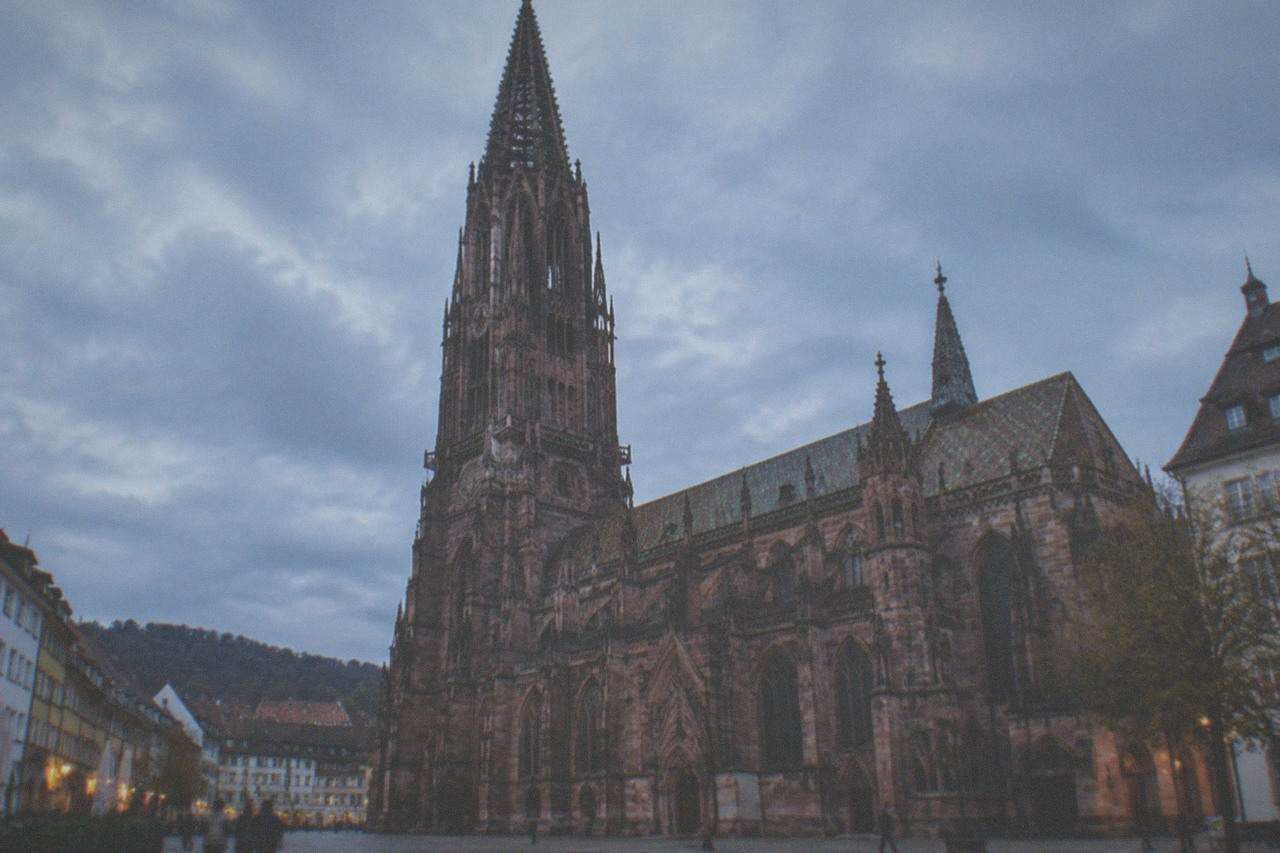
Is Freiburg Catholic Or Protestant?
Freiburg is a Catholic city. Its landmark, the Münster, is a Catholic minster and the metropolitan church of the Archdiocese of Freiburg, whose metropolitan seat is here. Today the city runs on secular civic life, but its biggest buildings and oldest institutions are Catholic ones.
That one-line answer hides a genuinely interesting regional story. Baden, the historic state Freiburg sits in, is one of the classic confessionally mixed territories of southwestern Germany. Travel a short way north or east and you find villages whose churches belong to Protestant congregations, whose pastors have been Lutheran for centuries, and whose parish registers were kept in a different tradition altogether. Travel through the Breisgau around Freiburg and the churches are Catholic almost without exception.
The reason is political rather than pious. Freiburg spent its early modern centuries under Habsburg administration, as part of the Habsburg territories in the southwest known as Vorderösterreich, and the Habsburgs did not tolerate the Reformation in their towns. The Baden margraves, ruling their own territory with their own calculations, made different choices at different moments. The result is a confessional patchwork that you can still read off the landscape: a Catholic city sitting inside a mixed region, an hour's train ride from both thoroughly Protestant Stuttgart and thoroughly Catholic Alsace.
For a visitor this is not trivia. It decides which doors you walk through. The Münster is a Catholic house of worship with a living parish, not a museum piece, and it behaves like one: mass times shape its opening hours, and the nave is free to enter as a place of prayer rather than a ticketed attraction. The Freiburg Minster guide covers the practical details of a visit, including the tower climb, which the Münster's own turmbesteigung page lists at €5 for adults, €3 for children and teens, and €13 for a family, with under-7s free.
If you want a local's-eye view of the old town that grew up around this church, the trio below is a good shortlist: a photogenic-spots walk with a local, a self-guided scavenger hunt, and a full food tour through the Badische kitchens of the center.
Why Freiburg Stayed Catholic While Baden Split
Freiburg stayed Catholic because its rulers did. The surrounding Baden margraviate made its own confessional bargains, producing a mixed state in which some lines turned Protestant and others stayed Catholic. Freiburg kept its Catholic clergy, its monasteries, and eventually an archbishop.
The university is the clearest surviving proof of the Catholic institutional weight. It was founded in 1457 by charter of Duke Albrecht VI of Austria, a Habsburg, and the university's own history pages carry the charter date: 21 September 1457. A university founded by a Habsburg duke, in a Habsburg town, staffed at first by clergy, was built as a Catholic institution from the ground up. It is one of Germany's oldest universities, and with 24,507 students in the winter semester of 2025/26 it remains the engine of the modern city.
The Reformation arrived in southwestern Germany in the early modern period like weather, reaching some places and passing others by. In territories where princes converted, church property was reorganized, monasteries were dissolved, and parish life restarted under new leadership. In Freiburg, the Habsburg administration held the line, and the religious houses survived. That survival is why the visitor today can walk from the Münster to the Augustinermuseum, which occupies a former Augustinian monastery complex, and see monastic architecture intact rather than rebuilt from ruins. The Augustinermuseum guide explains what the reopened building holds; the museum's own pages list admission at €12, reduced €8, with under-27s free and the ticket valid across the city's other municipal museums.
Later history reinforced the pattern. When the region was reorganized under the Grand Duchy of Baden, the Catholic church in the new German southwest was restructured. Freiburg, in other words, ended that reshuffle as one of the Catholic church's principal cities in Germany, with an archbishop whose cathedral stands in the middle of the old town market.
There is a second layer worth knowing. Baden was also a place where the state and the Catholic church fought hard over schools, seminaries, and appointments, a conflict that plays out in the architecture and the archives of the city. The Freiburg history guide traces the longer arc, from the Zähringer founding to the modern Green City, and it is the place to go if the political side of the story interests you more than the theological one.
The Catholic Landmarks You Can Actually Visit
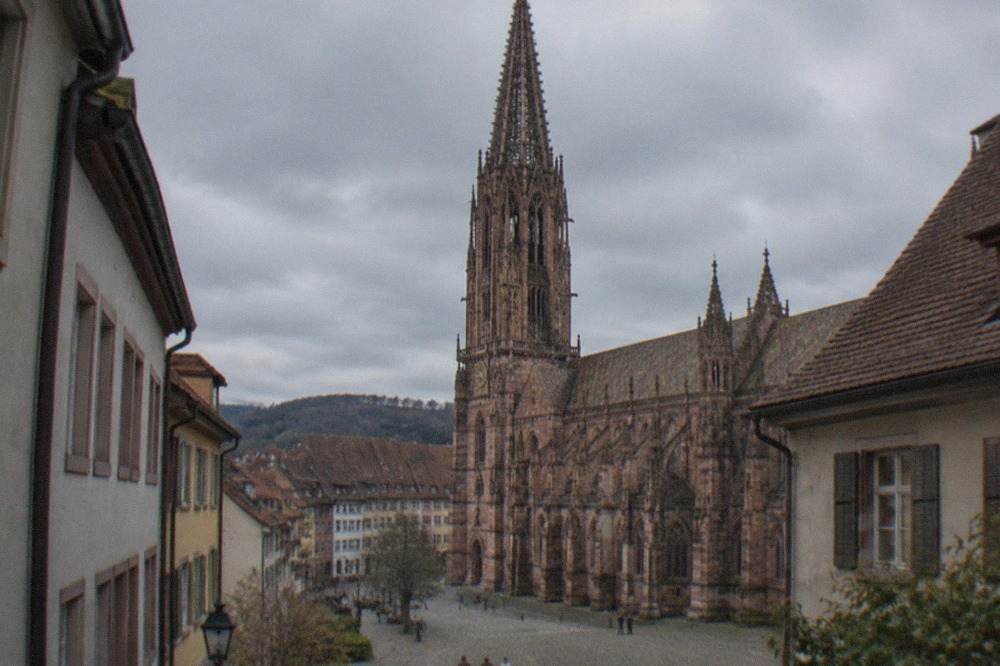
The Catholic city is visitable in a compact set of buildings: the Münster and its free nave, the tower climb to the 70 m gallery, the former Augustinian monastery that is now the Augustinermuseum, and the Christmas market that turns Rathausplatz and the Münster's square into an Advent fair each 19 November to 23 December. Each carries its own verified admission and hours, listed below.
The Münster is the head of the list by any measure. The west tower stands 116 m tall, though the visitor climb reaches a gallery at 70 m, and the Münster's own tower page is explicit that the top gallery closes in winter. Climbing hours run Monday to Saturday 11:00 to 16:00 and Sundays and holidays 13:00 to 17:00, with the last ascent about 15 minutes before closing. The nave itself costs nothing and is open as a place of worship. For everything else about the church and its square, including the market that fills it, see the Münsterplatz market guide.
The Augustinermuseum is the other essential stop for the religious story, because it is the religious story, in a building. The former Augustinian monastery church now houses the city's main art and cultural history collections, and after more than two decades of phased renovation it fully reopened on 28 February 2026 with new exhibition space in the former convent building and historic vaulted cellars. Current listings put it at around 3,400 square meters of display, and the museum's pages list hours of Tuesday to Sunday 10:00 to 17:00, Fridays to 19:00, admission €12, reduced €8, free under 27. The full index of guides sits on Freiburg Travel Guide.
The smaller houses fill in the picture. The Museum Natur und Mensch charges €5, reduced €3, with under-27s free, though note its permanent exhibition is closed from 4 August 2026 until around the end of February 2027 for renovation, with special exhibitions continuing. The Archäologisches Museum Colombischlössle, in a neo-Gothic villa, lists €5, reduced €3. And the Münstermarkt, the market that has traded in the Münster's shadow for centuries, runs Monday to Saturday from 07:30 with up to 130 stalls, closing at 13:30 on weekdays.
| Site | Religious origin | Admission | Hours |
|---|---|---|---|
| Freiburg Münster (nave) | Catholic parish and metropolitan church | Free | Open as a place of worship |
| Münster tower climb | Catholic church tower | €5 adult, €3 child/teen, €13 family, under 7 free | Mon-Sat 11:00-16:00, Sun/holidays 13:00-17:00 |
| Augustinermuseum | Former Augustinian monastery | €12, reduced €8, free under 27 | Tue-Sun 10:00-17:00, Fri to 19:00 |
| Archäologisches Museum Colombischlössle | Secular villa, church-adjacent collections | €5, reduced €3 | City museum hours |
| Museum Natur und Mensch | Secular collections | €5, reduced €3 | Permanent exhibition closed to about end Feb 2027 |
The external links are worth using when planning: the Münster's official tower page carries the current climb times and prices, and the municipal museums' site carries the post-reopening details for the Augustinermuseum. Both are primary sources, and both change their figures rarely enough that a printed guide would be out of date before it shipped. You can check the tower climb at the official Münster tower page and museum admissions at the Augustinermuseum's own site.
What The Protestant Presence Looks Like Today
Freiburg today has Protestant congregations, Protestant schools and a Protestant presence in civic life, but they are a minority tradition in a city whose headline institutions are Catholic. No reliable confession count for the current population appears in the city's own published figures, so a visitor should read the city through its buildings and calendar rather than a percentage. The practical takeaway: Sunday in the old town is a Catholic rhythm, and nobody will ask you which you are.
The honest way to say this is that the site's research turned up no verified, current statistic for how many Freiburgers belong to which confession, and a made-up percentage is worse than none. Germany's church-membership numbers are tracked nationally, and the southwestern picture is one of long decline in both large confessions alongside growth in the non-affiliated population, a pattern that certainly holds in a university city of 237,299 residents with a large student body. But printing a specific share for Freiburg would mean inventing a figure, and this site does not do that.
What you can observe directly is the balance of buildings. Walk the old town and you pass the Catholic Münster, the former Augustinian monastery, and the secularized remains of other religious houses, while the Protestant churches of the city sit a little further out, later foundations in a city that had filled its center centuries before they arrived. That is the typical geography of a confessionally mixed German region: the historic core belongs to the old confession, the newer congregations built where land was available and budgets allowed.
The university population changes the texture again. A city with 24,507 students in a single winter semester draws people from every tradition and none, and the daily life of the city, cafés, seminars, cycle traffic, the Frelo bikes that Grok's research indicates number about 1,200 across 162 stations since the 2026 renewal, is thoroughly secular. Religion in Freiburg is most visible in its heritage, its calendar, and its architecture rather than in street-level observance.
How The Confessional Story Shapes What You See
The Catholic-Protestant split explains three things a visitor otherwise misses: why the Münster dominates a market square rather than a cathedral close, why the old town's biggest museum is a monastery, and why the city's calendar is built around Catholic feast days, from the November opening of the Christmas market to the Fasnet parades that end on Shrove Tuesday. The confessional map is the itinerary.
Start with the market. A minster with a market pressed against its walls is a Catholic arrangement in spirit: the church at the center of commerce, the parish and the traders sharing one square, week after week, century after century. The Münstermarkt still runs Monday to Saturday from 07:30 with up to 130 stalls, and the shape of the trading day has barely moved. The Freiburg food guide picks up where the market leaves off, from Badische taverns to the long-standing breads and sausages of the region.
The monastery explains the museum. When you walk into the Augustinermuseum you are walking into a building whose stones were laid for a religious community, and the collections inside, sculpture, medieval art, the cultural history of the Breisgau, are in large part the art that the church in this region produced and preserved. That is why the €12 day ticket, valid across the other city museums, is as much an architecture ticket as an art ticket.
And the calendar explains the seasons. The Christmas market opens, as it has for years, in the run-up to Advent, running 19 November to 23 December in 2026. Fasnet, the regional carnival, peaks on Shrove Tuesday with a grand parade that the city's official listings time at 14:00, after the storming of the town hall on the Thursday before. These are Catholic rhythms, whatever the personal beliefs of the people dancing in them, and they structure the tourist year as firmly as the weather does. The best time to visit guide weighs those seasons against crowds and climate.
One practical note for photographers and anyone planning content: the most productive hour in the old town is the hour after the market opens, when the stalls are still being set against the Münster's Gothic west front. That is precisely the window that the Discover Freiburg's Most Photogenic Spots walk is built around, a roughly 1.5-hour route with a local guide that moves through the lanes and viewpoints that a first-time visitor would spend half a day finding alone. It runs from $92, and its listing currently shows only 2 reviews, too few a pool for any kind of rating claim, so judge it on the route itself rather than a star average.
If your travel style is more self-directed, the scavenger hunt option below covers similar ground as a puzzle route through the center, at a fraction of the price of a guided walk.
The self-guided scavenger hunt runs about 2 hours from $3, is rated 4.4 across 43 reviews, and turns the old town's gates, squares and Münster into a series of clues. For a family or a pair of travelers who would rather move at their own pace, it is the cheapest structured way to see the confessional geography described above, because the route inevitably crosses the Catholic core and the market square that anchors it.
For travelers who want the deeper city, the food tour at the end of this article walks the Badische kitchens and taverns, from $126 for a roughly 3-hour full-meal tour, a format that suits the Münstermarkt-and-tavern side of the city better than any bus tour could.
Common Questions About Catholic And Protestant Freiburg
Is Freiburg catholic or protestant?
Freiburg is Catholic. The Münster is a Catholic minster and the seat of the Archdiocese of Freiburg, the city stayed Catholic under Habsburg rule while parts of the surrounding Baden territory turned Protestant, and its major religious landmarks, the Münster, the former Augustinian monastery, the church calendar, are all Catholic in origin. Protestant congregations exist and are part of civic life, but they are the minority tradition.
Is the Freiburg Münster a Protestant church?
No. The Münster is a Catholic church, the metropolitan cathedral of the Archdiocese of Freiburg, and an active parish. The nave is free to enter as a place of worship, and the tower climb, to a gallery at 70 m of the 116 m tower, runs Monday to Saturday 11:00 to 16:00 and Sundays and holidays 13:00 to 17:00, at €5 for adults, €3 for children and teens, €13 for families, with under-7s free.
Why is Baden confessionally mixed while Freiburg is Catholic?
Because rulers, not residents, decided. Freiburg belonged to the Habsburg southwestern territories, where the Reformation was suppressed, while the Baden margraves made their own choices, with some lines turning Protestant. The result is a regional patchwork: a Catholic Freiburg surrounded by areas of both confessions, a pattern that still shows in which village churches have which traditions.
What did the university have to do with religion?
The University of Freiburg was founded by a Habsburg duke, Albrecht VI of Austria, whose charter is dated 21 September 1457. It was founded as a Catholic institution in a Catholic town, and its survival through the Reformation era is part of why the city's Catholic institutions remained intact. Today it is a secular public university with 24,507 students in the winter semester of 2025/26.
Does any of this affect a visitor practically?
Mostly through opening hours and the calendar. The Münster functions as a church first, so mass times shape access, and its big annual events, the Christmas market from 19 November to 23 December and the Fasnet carnival in February, follow the church year. Beyond that, no: the city is secular in daily life, and nobody will ask a visitor about confession.
Are there Protestant churches to visit in Freiburg?
Yes, Protestant congregations and their churches are part of the city, though they are newer and sit outside the historic core that the Catholic institutions filled centuries earlier. This site's research found no verified current statistic on confession membership in the city, so the honest answer is to read the balance through buildings and calendar rather than a percentage.