University Of Freiburg: A Visitor's Guide To Germany's Fifth-Oldest University
The University of Freiburg has shaped this city since 1457, and roughly one in ten residents is a student. Here is what that means for a visitor walking the old town today.
Short answer
The University of Freiburg was founded in 1457 by charter of Albrecht VI of Austria and enrolled 24,507 students in the winter semester of 2025/26, in a city of 237,299 people. Visitors see it mainly through the old town's university buildings, the free Uniseum museum, and the student life around the Münster.
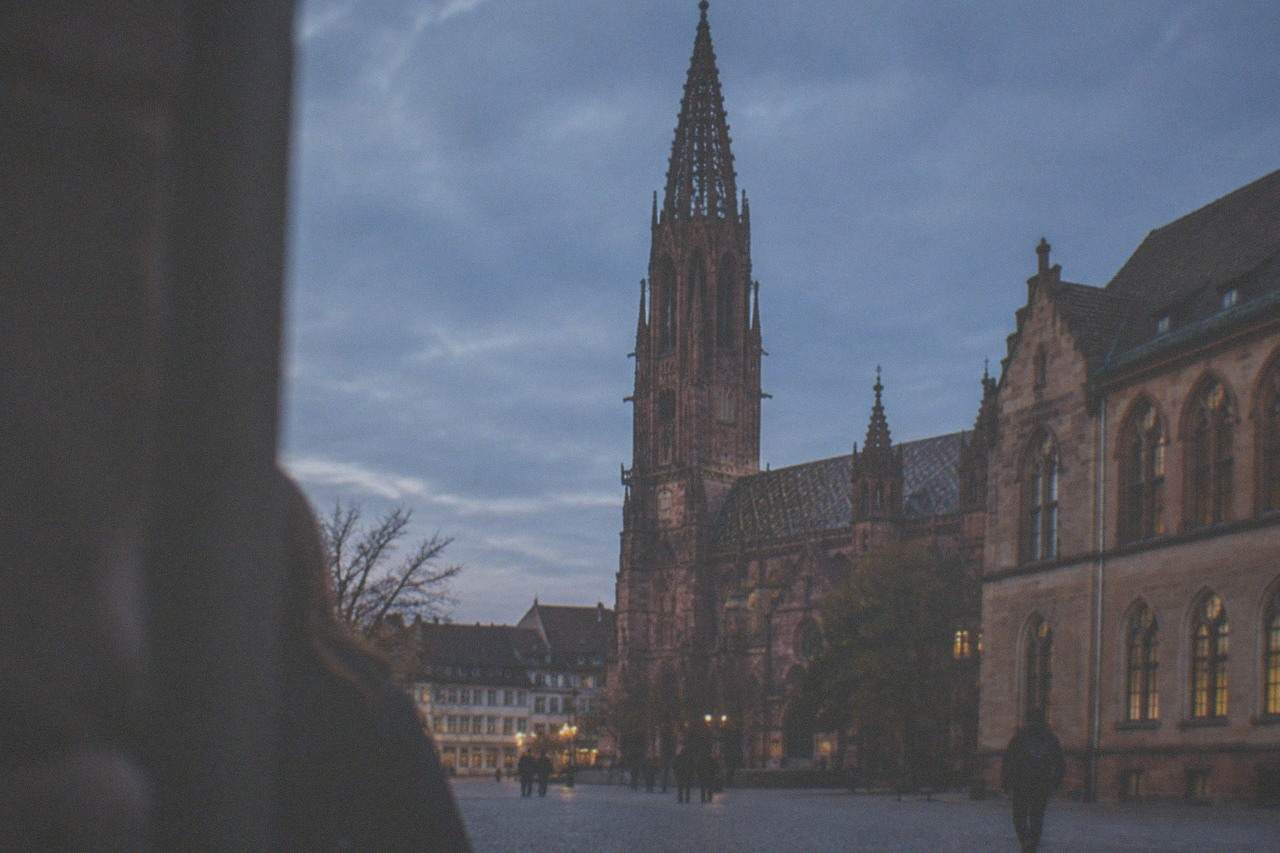
The University of Freiburg is not a campus you drive to and photograph from a parking lot. It is threaded through the old town, older than most of the buildings around the Münster, and it has been quietly dictating the rhythm of Freiburg life since 1457. Roughly one in ten people in this city of 237,299 is a student, which does more to explain the feel of Freiburg than almost any other number.
This guide is for the visitor, not the applicant. If you are already in Freiburg, or about to be, and you want to understand what the university is, where it came from, and which parts of it you can genuinely experience in a couple of hours, the sections below answer exactly that, with verified figures only. Where a number is genuinely not settled, the text says so plainly rather than guessing.
What Is The University Of Freiburg?
The University of Freiburg, formally the Albert Ludwig University of Freiburg, is a public research university founded in 1457 by charter of Archduke Albrecht VI of Austria, dated 21 September 1457. It enrolled 24,507 students in the winter semester 2025/26, making it one of the oldest universities in the region and the single biggest force shaping daily life in a city of 237,299 residents.
More than five centuries of continuous operation is the headline. What matters more for a visitor is that the university never retreated behind a wall. Its buildings sit among the shops and wine taverns of the old town, its students fill the Bächle-lined lanes between lectures, and its faculties spread outward into dedicated quarters. Freiburg without the university would be a pretty Black Forest market town of perhaps half the size. With it, the city has a density of bookshops, bicycles and cheap lunch spots that is unusual anywhere in Germany.
The university's own history pages give the founding charter in full detail, and they are worth reading before a visit if you like your sightseeing grounded: the university's official history. The short version: Albrecht VI, ruling the Further Austrian lands, signed the charter on 21 September 1457, and teaching began shortly afterward. The institution survived the Reformation, the Napoleonic upheavals, the destruction of the Second World War and the postwar reconstruction to reach its present scale.
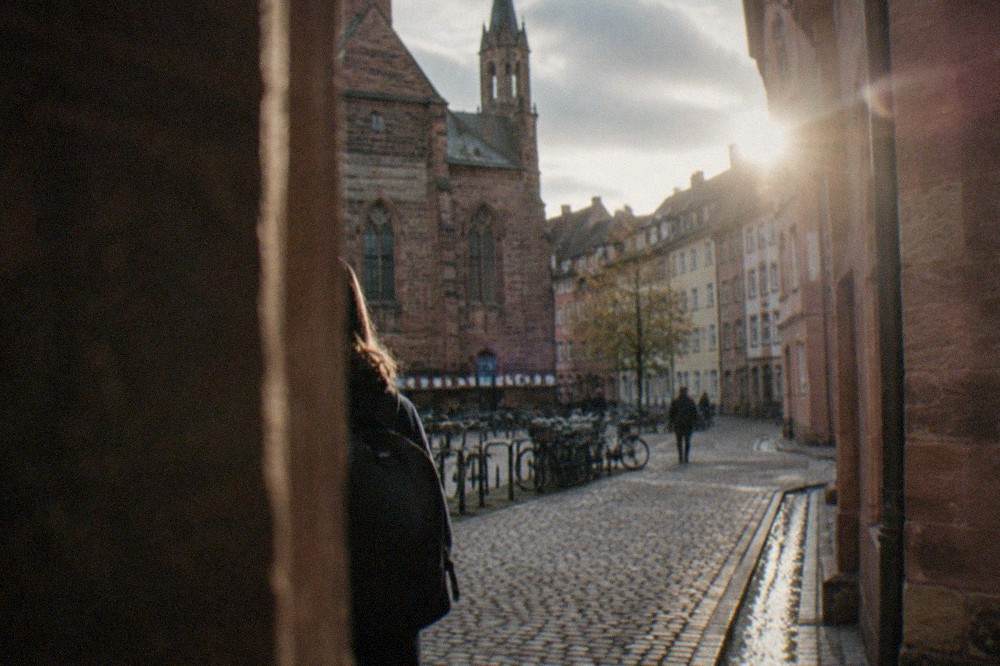
For planning purposes, think of the university in three layers: the historic core in and around the old town, the free Uniseum museum that tells its story, and the wider spread of faculties and student neighborhoods that give whole districts their character. You can cover the first two in a morning.
How Old Is The University And Why Does The Founding Year Matter?
Founded in 1457, the University of Freiburg is one of the oldest universities in the German-speaking world, established before Columbus reached the Americas and long before Germany existed as a state. The charter, signed by Albrecht VI of Austria on 21 September 1457, makes it older than almost every building and institution a visitor sees around it in the old town today.
The founding date is not trivia. It explains why the university's footprint sits so deep inside the old town: when the institution was born, the old town essentially was the town. The city walls, the Martinstor and the Schwabentor, and the Münster that dominates the skyline all predate or frame the university's earliest centuries, and the growing institution simply absorbed plots inside the same walls. That layered proximity is why a walk from the Münster to any of the old university buildings takes minutes, not a tram ride.
The city's own population figures, published on its official statistics pages, record 237,299 residents as of 30 June 2025 across 15,304 hectares, and the student body of 24,507 is counted separately in the university's own enrollment statistics for winter semester 2025/26. Neither source is a tourism brochure, which is exactly why both are worth citing: the numbers come from the institutions themselves. You can check the city figure directly at Freiburg's official population page.
A city where students make up roughly a tenth of the population behaves differently from a city without one. Lecture schedules move crowds. Semester breaks empty lanes that are packed in term time. Prices at bakeries and wine bars near the old town reflect a customer base that includes thousands of people on student budgets. If your visit feels unusually lively on a Tuesday in October, or unusually calm in August, the academic calendar is usually the reason.
| The Core Numbers | Figure | What It Means For A Visitor |
|---|---|---|
| Founded | 1457 (charter of Albrecht VI, 21 Sept 1457) | One of the oldest universities in the German-speaking world |
| Students | 24,507 (winter semester 2025/26) | Roughly one in ten residents is a student |
| City population | 237,299 (30 June 2025) | A mid-sized city with a large-town feel |
| City area | 15,304 ha | Compact enough to walk the historic core |
| University museum | Uniseum, free entry, Thu-Sat 14:00-18:00 | The easiest single way to engage the history |
The Uniseum, the university's own museum, is the practical anchor for this history. It is free, it opens Thursday to Saturday from 14:00 to 18:00, and it covers the institution's story from its medieval beginnings to the present, including the darker chapters of the National Socialist era. For a visitor with only one free hour of indoor time, it is a better use of that hour than almost any paid museum in the city.
A guided walk is the other efficient way to absorb the old town the university has occupied since 1457, and the selection below pairs the classic city format with two tours that suit a university-themed visit at different budgets and paces.
Where Do You Actually See The University As A Visitor?
Visitors encounter the University of Freiburg through the old town's historic university buildings around the Münster quarter, the free Uniseum museum on the campus edge, and the visible student life in lanes, squares and cheap eateries across the Altstadt. There is no single gated campus, so there is no ticket and no gate to pass: the university is something you walk through.
Start at the Münster. The cathedral is the city's landmark and, historically, the anchor of the quarter where the university grew up. The Münsterplatz, with its daily market of up to 130 stalls on weekdays, sits in the middle of a network of lanes where university buildings, merchants' houses and civic institutions have shared space for centuries. The market runs Monday to Saturday, from 07:30 to 13:30 on weekdays, with Saturday hours typically to 14:00, and it is as good a place as any to watch the student population in its natural habitat.
From there, the honest visitor strategy is to wander rather than to chase a checklist. The university's historic buildings do not advertise themselves with signage in the way a purpose-built campus would. You will pass colleges, libraries and institutes as continuous old-town architecture, and the pleasure is in the texture, not in ticking names off a list. For the buildings you can enter on a normal visit, the Uniseum is the reliable one, and its free entry and Thursday-to-Saturday afternoon hours make it an easy add-on.
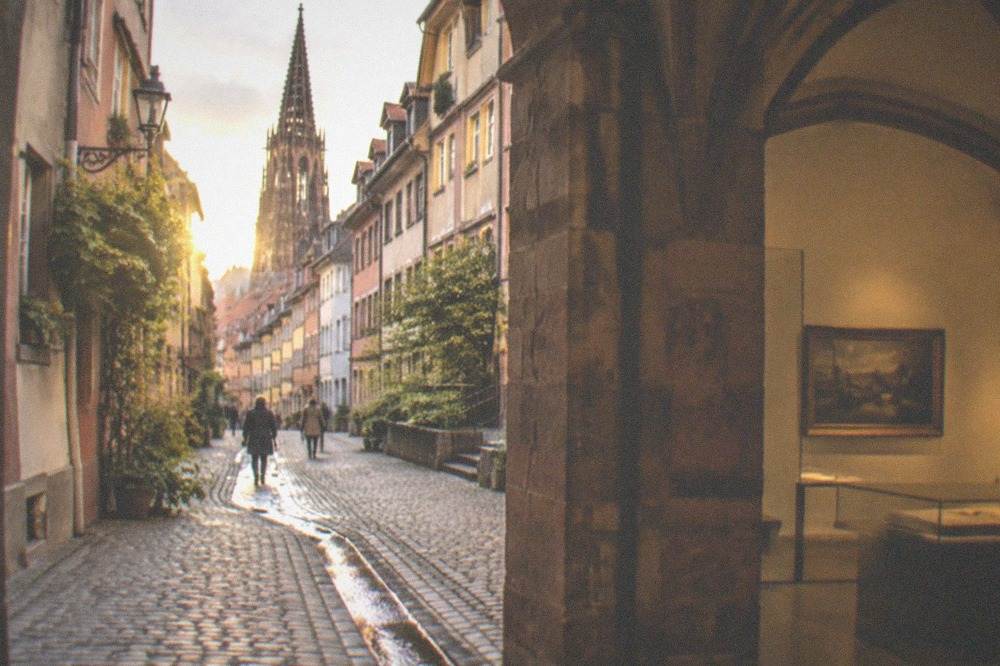
The old town gates frame the walk nicely. Martinstor and Schwabentor are both survivors of the medieval wall that once enclosed the town the university was born into, and each takes minutes to reach from the Münster on foot. The Bächle, the little water channels running alongside many old-town streets, are the other detail that makes this quarter feel distinct from any other German university town.
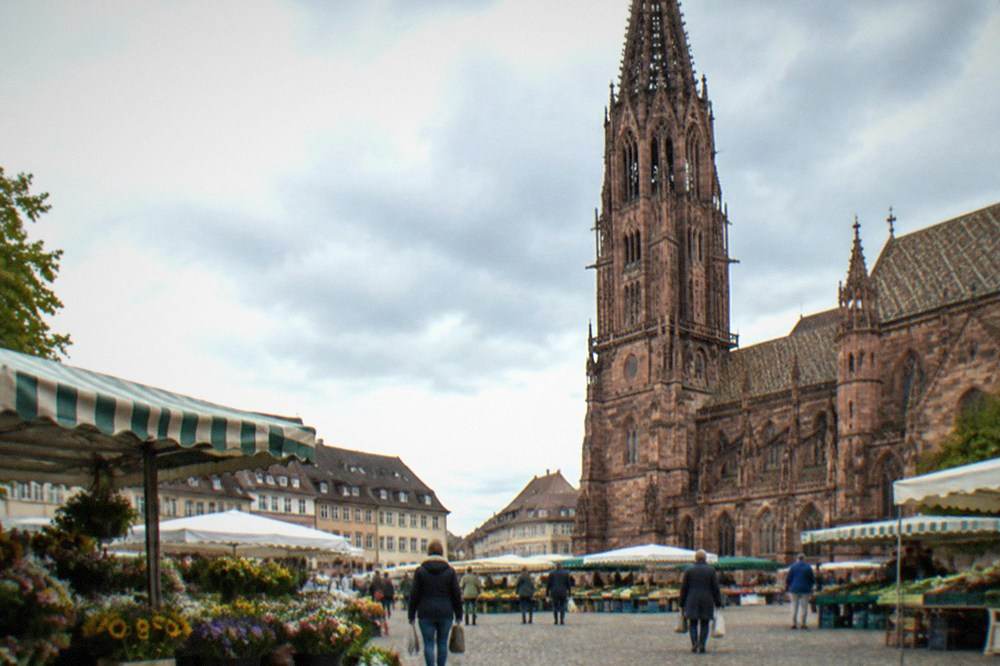
The Münster itself deserves its full stop. Entry to the nave is free, and the tower climb, which reaches a gallery at 70 meters up the 116-meter west tower, costs €5 for adults, €3 for children and teens, €13 for a family, and nothing for children under 7. It runs Monday to Saturday from 11:00 to 16:00 and Sundays and holidays from 13:00 to 17:00, with the top gallery closed in winter. Two figures matter and should be kept together: the tower is 116 meters tall, but visitors climb to the 70-meter gallery, not the top. The view from up there is the single best way to read the city the university shaped, from the dense old-town roofscape to the Black Forest hills beyond.
For a fuller planning treatment of the cathedral and the square around it, see the companion pages on Freiburg's Münster and tower climb and the Münsterplatz market.
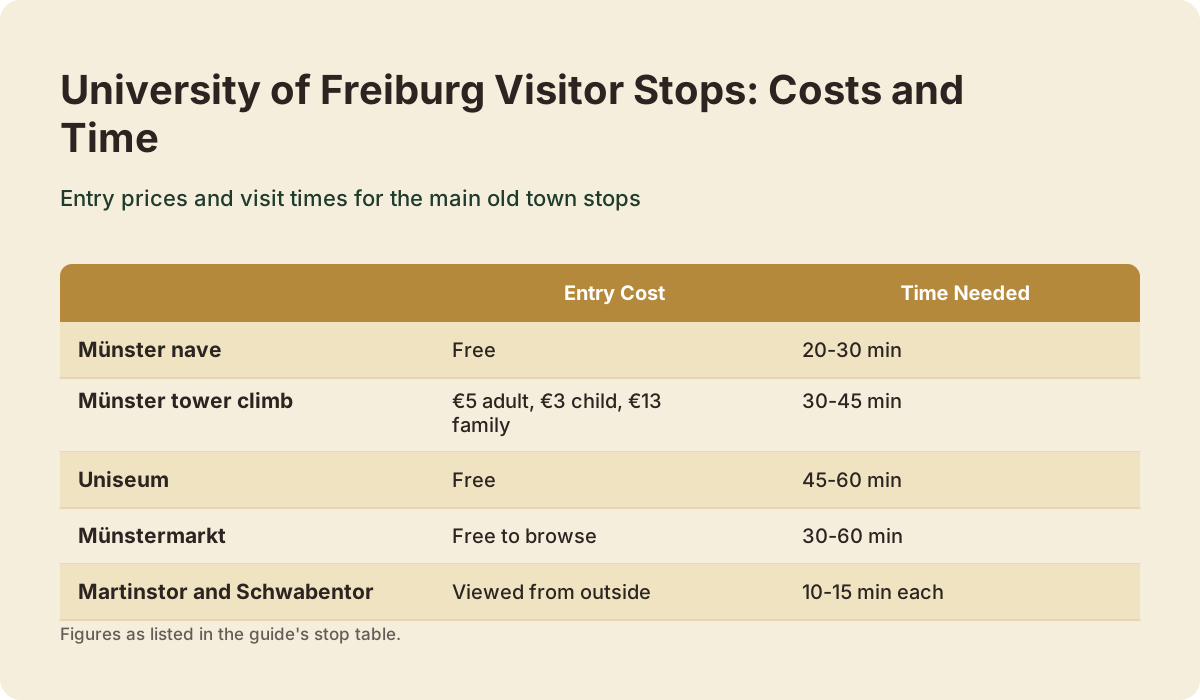
| Stop | What You Get | Entry Cost | Time Needed | |---|---|---| | Münster nave | Gothic interior, free entry | Free | 20-30 min | | Münster tower climb | City panorama from the 70 m gallery | €5 adult, €3 child, €13 family | 30-45 min | | Uniseum | University history, from 1457 to the present | Free | 45-60 min | | Münstermarkt | Up to 130 weekday stalls, local food | Free to browse | 30-60 min | | Martinstor and Schwabentor | Medieval gates framing the old town | Viewed from outside | 10-15 min each |
One walk on this site's roster digs into the city's history from an angle the university's own story brushes against: the Red Light District City Tour, a roughly two-hour guided walk rated 4.2 across 22 reviews, from $26. It covers the streets around the old town's edges and the social history most tours skip, which pairs well with a morning spent on the university's more respectable centuries.
What Do The University And The City Do To Each Other?
The university and the city have grown into each other since 1457, so that Freiburg's economy, housing, nightlife, cultural calendar and even its crime and transport statistics all carry a student signature. The 24,507 students are why a city of 237,299 supports the volume of cafés, festivals and late-night traffic it does, and why the academic calendar drives the tourist seasons' quieter edges.
Consider what one student in ten residents does to a place. Semester terms fill the lanes between October and February and again from April to July. The summer break, and the weeks around Christmas and Easter, thin them out. The city's tourism figures for 2025, reported by the official partner portal, counted 1,010,708 arrivals and 2,130,785 overnight stays at establishments with at least ten beds, about 2% below 2024, and described the result as consolidation at a high level. Those are visitor numbers, not student numbers, but the two crowds share lanes, tables and trams all year. More of these guides are collected on Freiburg Travel Guide.
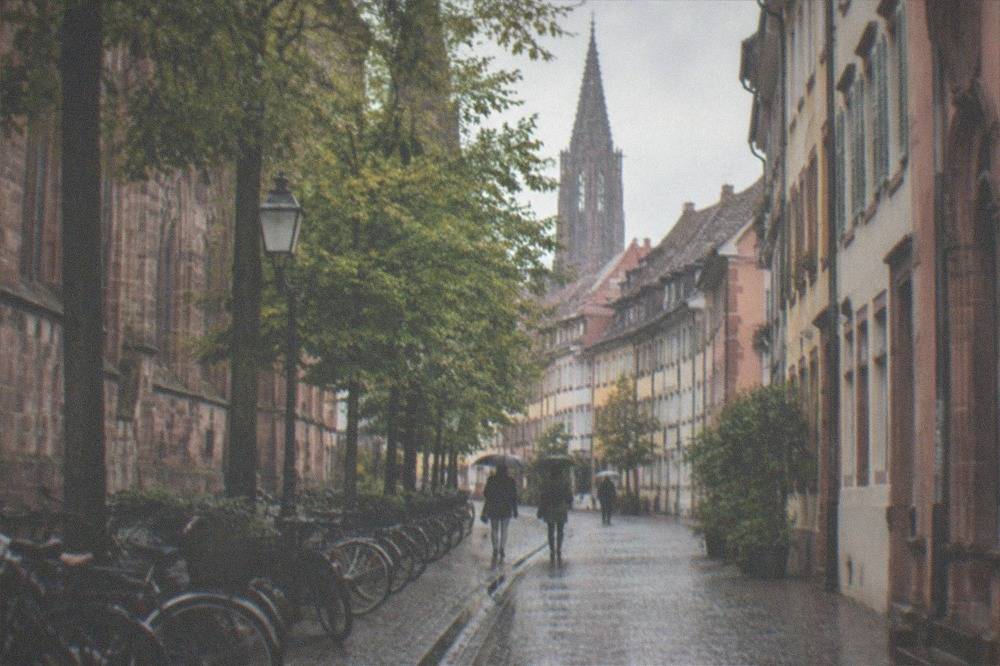
The university's presence also explains the city's green and cycling reputation more than most visitors expect. Freiburg's own monitoring reports that walking, cycling and public transport together rose from 67% of trips in 2017 to 76% in 2023. A university city with a huge student population and a dense old core is exactly the environment where that shift happens. Grok's research also indicates a bike share of around 33% of trips, though that figure is not independently confirmed, so treat it as indicative rather than settled.
Housing is the other place the two institutions meet, sometimes awkwardly. Freiburg's hotel scene has been in flux, with Grok's sweep reporting the Novotel am Konzerthaus sold in September 2026 and leased to Scandic with a renovation planned, the IntercityHotel moving to the Leonardo brand, and the Panoramahotel closed since a June 2024 fire. For visitors, the practical takeaway is that the well-located hotels near the station and old town can fill quickly in term time, and booking ahead is not paranoia. The city's visitor levy, for reference, is an overnight tax of 5% of the net room price, not a Kurtaxe, with under-18s exempt.
Safety questions come up in this context, and the fresh reporting is reassuring. Reported crime fell 6% in 2025, and Freiburg is no longer the highest crime-rate city in Baden-Württemberg. The student-heavy districts around the edge of the old town, including the Stühlinger quarter near the station, have seen deliberate upgrades, with the city reporting new seating, improved lighting and a weapons-and-knife ban zone in force from August 2025. If you want to see and understand these edges of the old town rather than just the postcard core, the red light district walk covers them with a guide who knows the social history.
| City-University Interaction | The Effect You Notice |
|---|---|
| Term time vs. breaks | Lanes and cafés fill in term, quiet in semester breaks |
| Student budget pressure | Cheap lunch spots and wine bars cluster in the old town |
| Cycling culture | 76% of trips walk, cycle or use transit (2023) |
| Housing demand | Well-located hotels fill fast in term time |
| Nightlife | Student-heavy bar scene, strongest Thursday to Saturday |
Which University-Adjacent Sights Are Worth Your Time?
Beyond the Uniseum and the old-town core, the university-adjacent sights that reward a visitor are the city's museums cluster, the Augustinerplatz beer-and-wine culture a short walk from the historic quarter, and the green escapes that generations of students have used as their backyard, from the Schlossberg to the Black Forest edge.
The Augustinermuseum is the flagship. It fully reopened on 28 February 2026 after more than twenty years of phased renovation, adding around 1,600 square meters of new exhibition space in the former convent building and historic vaulted cellars. Admission is €12, reduced €8, the day ticket is valid across the other city museums, and entry is free for anyone under 27, which, in a university city, covers a lot of people. It opens Tuesday to Sunday from 10:00 to 17:00, Fridays to 19:00. The museum holds the region's art and cultural history, so it doubles as the deep background to everything the university grew up inside.
The other city museums share the under-27-free rule and are individually cheap: the Museum für Neue Kunst at €7 reduced to €5, the Archäologisches Museum Colombischlössle at €5 reduced to €3, and the Museum Natur und Mensch at €5 reduced to €3. The Dokumentationszentrum Nationalsozialismus is free, and its subject matter is directly relevant to any honest account of the university's past, including the years the institution was complicit in the Nazi regime.
Outdoors, the Schlossberg is the city's closest hill, free to access on foot, with the Schlossbergbahn funicular charging €3.70 one way or €6.50 up and down for adults. The tower on the summit is reached on foot. Farther out, the Schauinslandbahn cable car, at 3,600 meters one of Germany's longest, costs €15 for an adult return and runs daily from 09:00 to 17:00, with a scheduled autumn maintenance closure from 16 November to 4 December 2026. For more on these, the dedicated guides to the Schlossberg and its tower and the Schauinsland and its cable car cover the detail.
A wine option rounds this out neatly, because the university sits in one of Germany's significant wine regions and the tavern scene is part of the same student-and-scholar culture that has run since 1457. The Veni, Vidi, Vino wine hike and tasting, roughly 2.5 hours, rated 4.4 across 167 reviews, from $79, walks out of the city into the vineyards and includes a tasting. It is the best single tour on this roster for pairing the university city with its surrounding countryside.
How Does A University Visit Fit Into A Freiburg Day?
A university-themed Freiburg day fits naturally as a morning in the old town around the Münster, a free hour in the Uniseum in the early afternoon, a museum or the Schlossberg after that, and an evening in the lanes around Augustinerplatz where students and visitors share the same tables. Everything in this itinerary is walkable or one short tram ride apart.
The order matters less than the density. Freiburg's old town is small enough that a brisk walker crosses it in fifteen minutes, so the day is really a slow loop rather than a route. Begin at the Münster when the market is running, because the market square is the closest thing to the university's historic front yard. Climb the tower if the weather holds, since the gallery view shows you the whole pattern at once: the compact old town, the belt of later growth around it, and the hills beginning immediately beyond.
For the afternoon, the Uniseum's Thursday-to-Saturday hours from 14:00 to 18:00 fit a museum slot perfectly, and the Augustinermuseum is close enough to substitute if the day is one where the Uniseum is closed. The city's transport makes the whole plan cheap: a single zone 1 ticket is €3.00, €2.70 on a smartphone, a day ticket for one zone is €7.20, and the RVF Welcomekarte, at €27.00 for three days, covers buses and trains and even includes the Schauinslandbahn. Note the distinction that trips up many visitors: Freiburg is not a KONUS municipality, so a hotel stay in the city does not come with a KONUS guest card. The Welcomekarte is the visitor product here.
A self-guided format suits the more independent end of this plan. The Freiburg scavenger hunt self-guided tour, roughly three hours, rated 4.9 across 15 reviews, from $45, sends you through the old town solving clues at the very landmarks this guide describes, at your own pace and in your own order. It works well on a first day when you want structure without a fixed departure time.
| Time | Activity | Cost | Notes |
|---|---|---|---|
| Morning | Münster, tower climb, market | €5 adult tower | Market Mon-Sat, to 13:30 weekdays |
| Midday | Old-town lanes, gates, Bächle | Free | Walkable loop, no ticket |
| Early afternoon | Uniseum | Free | Thu-Sat, 14:00-18:00 |
| Late afternoon | Augustinermuseum or Schlossberg | €12 / free hill | Museum free under 27 |
| Evening | Augustinerplatz wine taverns | Food and drinks at till prices | Busiest in term time |
What Practical Questions Do University Visitors Ask?
The questions visitors most often ask are whether the university can be visited freely, whether the Uniseum costs anything, how to get to the old-town quarter by tram, and what the visit costs in total. The short answers: yes, no charge, a single €3.00 zone 1 ticket covers the tram, and a full university-themed day can cost as little as the €5 tower climb plus lunch money.
Can you walk into university buildings? In the old town, the exterior experience is the main one, and the Uniseum is the building designed for visitors. The university is a working institution, so lecture halls and libraries are not open sightseeing, but nothing prevents you from walking the public lanes and squares between them.
Is the visit suitable with children? The tower climb is the star for older children, with the family ticket at €13, and the Münstermarkt is a food playground at any age. The under-7s climb free, and the under-27s enter every city museum free, which makes a family with teenagers one of the cheapest museum audiences in Germany.
What about language? Guided tours in English exist on this roster, including the dramatized and classic city walks, and the Uniseum's displays carry English text alongside German. Freiburg is a university city; English is widely understood in the visitor economy, though a few German phrases go a long way in the market and the wine taverns.
The evening is where the student city earns its reputation, and where the site's own nightlife and food coverage helps: see Freiburg's nightlife and bars for the late hours. The self-guided scavenger hunt and the city walks both leave from the central old town, so any of them slots onto the end of a university morning.
The trio below repeats the three formats this guide has leaned on: a guided history walk with an edge, a wine hike into the surrounding vineyards, and a self-guided hunt through the landmarks. Whichever you choose, book the slot before you finalize the day, since term-time weekends fill the guided walks first.
Common Questions About The University Of Freiburg
When was the University of Freiburg founded?
The university was founded in 1457 by charter of Archduke Albrecht VI of Austria, signed on 21 September 1457. It has operated continuously since, making it one of the oldest universities in the German-speaking world.
How many students attend the University of Freiburg?
The university enrolled 24,507 students in the winter semester of 2025/26. In a city of 237,299 residents, that is roughly one student for every ten people.
Can visitors go inside the University of Freiburg?
The old town's university buildings are seen mainly from outside, since they are working academic buildings. The visitor entry point is the Uniseum, the university's own museum, which is free and open Thursday to Saturday from 14:00 to 18:00.
Is the University of Freiburg worth visiting as a tourist?
Yes, in the sense that you cannot visit Freiburg without visiting it. The university's buildings, history and student population define the old town's character. An hour at the Uniseum plus a walk through the Münster quarter covers the essentials for free.
How do I get to the university quarter in Freiburg?
The old-town core is walkable from the main station in about fifteen minutes, or two to three tram stops. A single zone 1 ticket costs €3.00, or €2.70 bought on a smartphone, and a one-zone day ticket is €7.20.
What is the oldest university in Germany?
Several German universities predate Freiburg, which is why it is usually counted among the oldest rather than the oldest outright. Its 1457 founding still places it far ahead of almost everything a visitor sees around it in the old town today.