Feldberg From Freiburg: A Practical Day-Trip Guide To The Black Forest's Highest Summit
Feldberg is the highest summit in the Black Forest, and it is the mountain most Freiburg visitors mean when they talk about heading uphill for a day. This guide sets out how to get there, what the summit actually offers, and what the realistic costs and backups are.
Short answer
Feldberg sits at the top of the Black Forest, reached from Freiburg by a direct regional train toward Titisee plus a connecting bus up the mountain. A 3-day RVF Welcomekarte at €27.00 covers regional transport and includes the Schauinslandbahn cable car, making it the strongest ticket for a summit-heavy itinerary.
Why Feldberg Makes A Perfect Day Trip From Freiburg
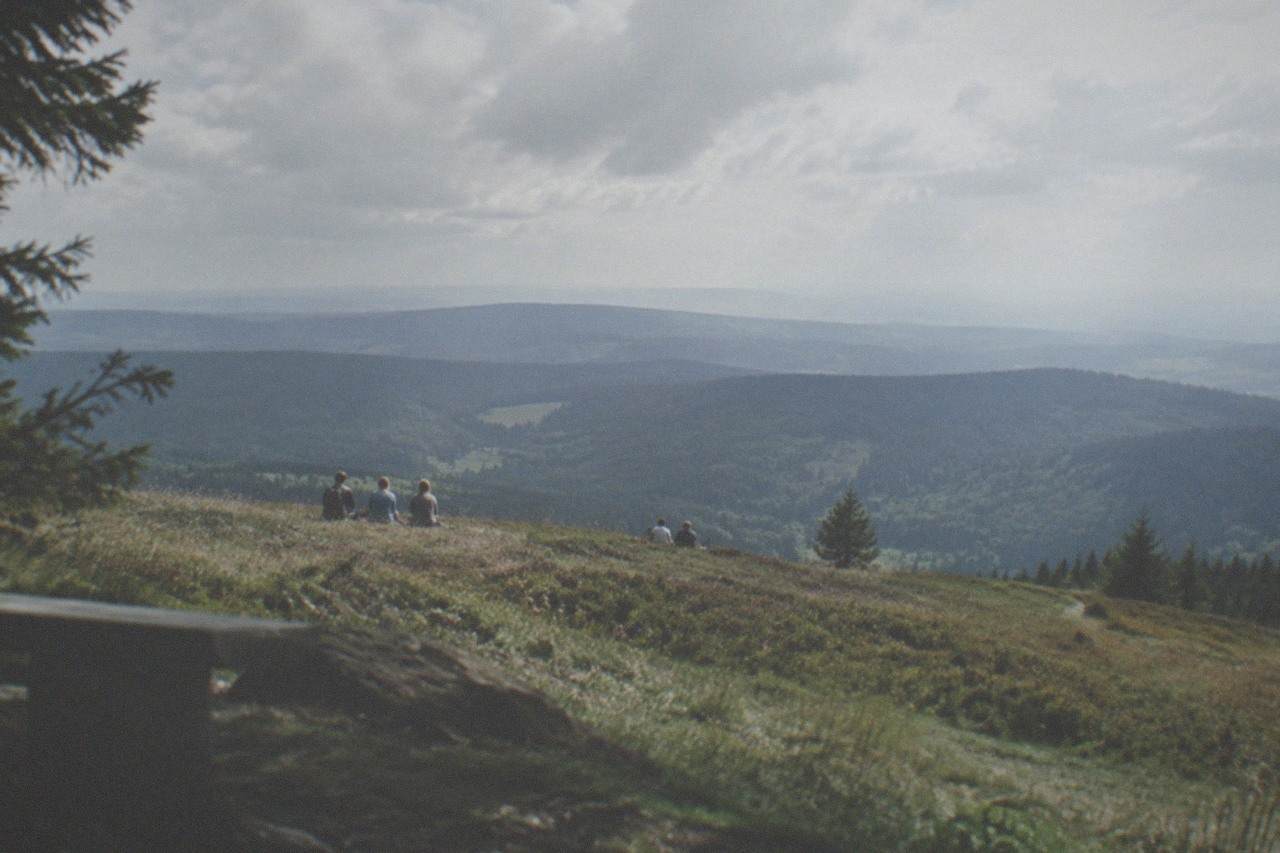
Feldberg is the highest summit in the Black Forest, the rooftop of a range that Freiburg sits at the foot of, and it works as a day trip because the rail line toward Titisee gets you into the high country without a car. The summit area mixes open moorland, forest trails and long views back over the Rhine plain toward the Vosges, and the whole outing can be done on regional tickets you would buy anyway for the city. In summer it is a hiking day; in winter it is the closest proper ski hill to Freiburg. Either way, the planning questions are the same: how to get up, what to do at the top, and what it costs.
What makes Feldberg distinct from the closer hills around Freiburg, like Schlossberg or the Schauinsland ridge, is scale. The summit plateau is wide enough that you can spend a full day walking its paths without retracing steps, and the terrain shifts between open heath, dark fir forest and small glacial lakes. The mountain also has a working cable-car network of its own in winter, which sets it apart from the walking-only summits nearer the city.
For visitors basing themselves in Freiburg, Feldberg slots into a broader pattern: the city for mornings and evenings, the high Black Forest for the middle of the day. Our one day in Freiburg itinerary shows how the city half of that split usually goes, and Feldberg is the natural counterweight when you want the opposite kind of day. If your trip is longer, the two days in Freiburg plan pairs a city day with a Black Forest day almost by design.
One planning note before the details: the mountain village, the ski area, the nature reserve and the train-accessible lakes below the summit are separate places that share the Feldberg name, and mixing them up is the most common reason a day goes wrong. This guide keeps them straight, with the practical numbers that matter.
How To Get From Freiburg To Feldberg Without A Car
The car-free route from Freiburg runs on the Höllentalbahn line toward Titisee, followed by a connecting bus that climbs to the Feldberg village and summit area, and the whole chain is covered by ordinary RVF regional tickets rather than any special mountain pass. You do not need a reserved seat or an advance booking. What you do need is a time buffer, because the bus leg is short, connections are not guaranteed, and the mountain weather does not care about your schedule.
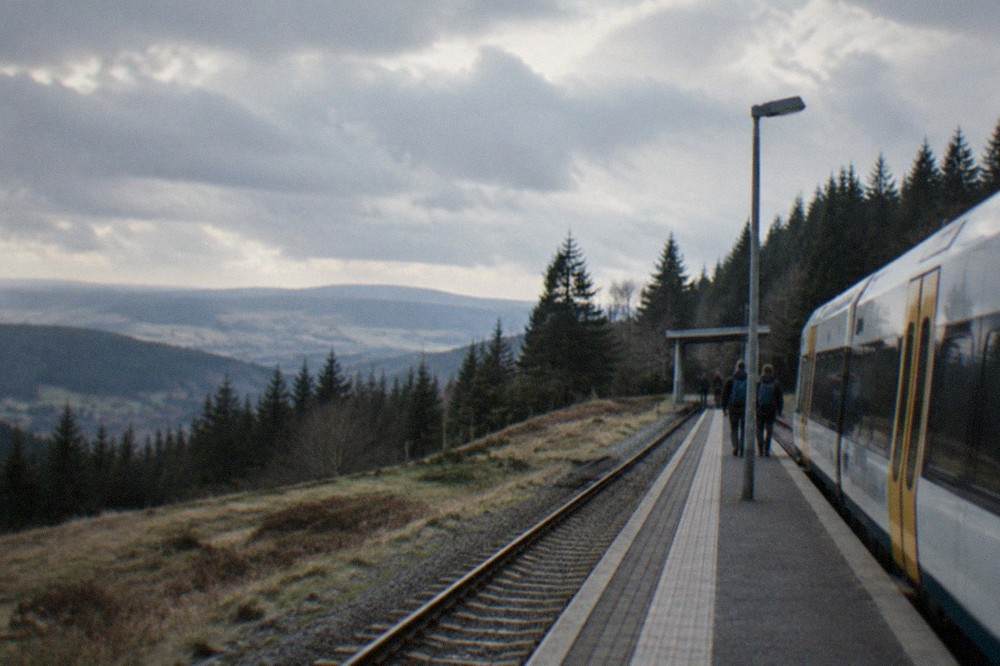
The rail half is the easy half. Trams from anywhere in central Freiburg feed the main station, and from there a direct regional train runs the scenic line through the Höllental, the gorge that gives the railway its name, toward the Titisee area. The journey is genuinely part of the day out: the line climbs steeply out of the Rhine valley, passes through cuttings and valleys, and is widely considered one of the more dramatic standard-gauge rides in the region. For the timetable and any engineering works, check the current Deutsche Bahn information for your travel date, because the Höllentalbahn has scheduled maintenance closures from time to time, and replacement buses change the arithmetic.
From the Titisee area, local buses run up to the Feldberg lifts and village. This is where you should confirm times on the day rather than trusting a printed schedule, and it is also where an early start pays for itself: the last buses down are far earlier than the last trains, and a missed connection can turn a relaxed summit afternoon into an expensive taxi conversation.
| Ticket | Price | What it covers |
|---|---|---|
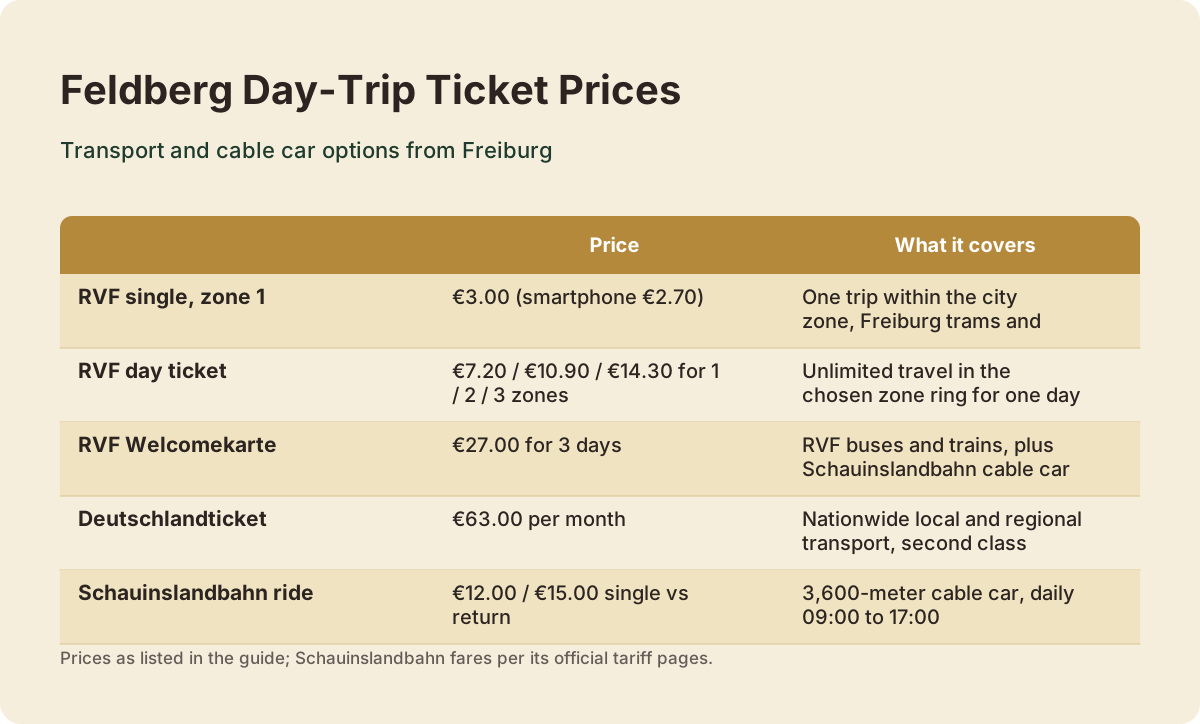
| RVF single, zone 1 | €3.00 (smartphone €2.70) | One trip within the city zone, Freiburg trams and buses |
| RVF day ticket | €7.20 / €10.90 / €14.30 for 1 / 2 / 3 zones | Unlimited travel in the chosen zone ring for one day |
| RVF Welcomekarte | €27.00 for 3 days | Regional buses and trains in the RVF network, plus the Schauinslandbahn cable car and a Kulturbonus |
| Deutschlandticket | €63.00 per month | Nationwide local and regional transport, second class |
The ticket decision is the one place where money is genuinely easy to save or waste. A day ticket for the right number of zones covers the train and the connecting buses; the Welcomekarte adds the Schauinslandbahn cable car, which on its own costs €15.00 return, so if your plans include both Feldberg and the Schauinsland ridge the three-day card pays for itself quickly. The Deutschlandticket only makes sense for longer stays. If you are coming from a stay elsewhere in the region, note that the RVF's tourist ticket page explains how the regional and guest-card systems interact; visitors staying in Freiburg itself should know that the city is not a KONUS member town, a point our KONUS guest card guide covers in detail.
What To Do On The Summit: Trails, Views And The Feldsee
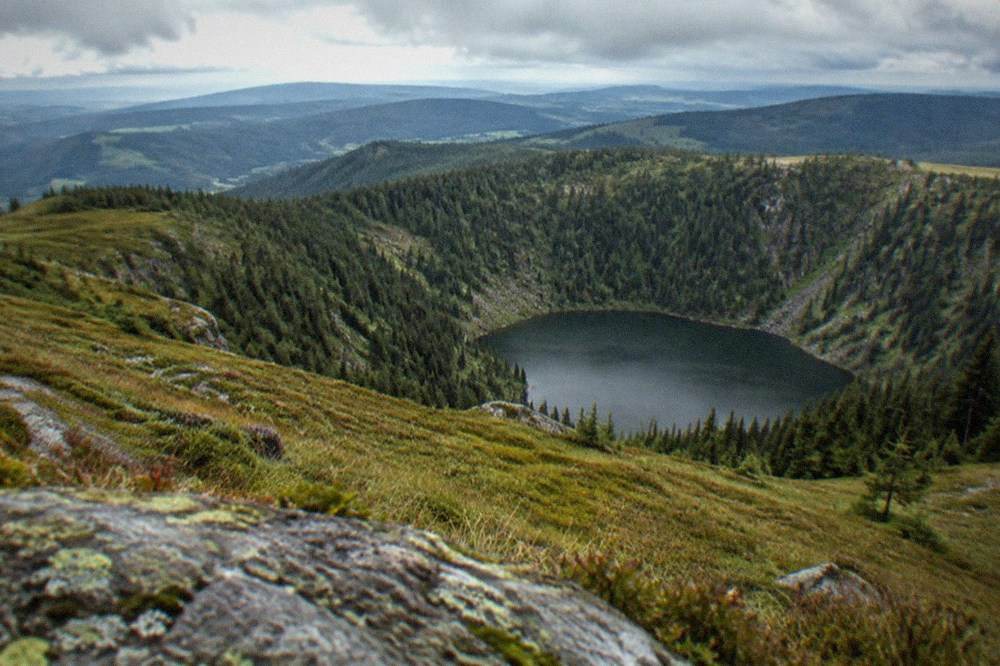
The summit plateau gives you three distinct anchors for a day: the panorama from the top station area, the walk to the Seebuck viewpoint and its Bismarck monument, and the longer forest path down to the Feldsee, a small glacial lake tucked in a cirque below the ridge. All three can be combined into one loop in good weather, and each is a legitimate outing on its own if the clouds are low.
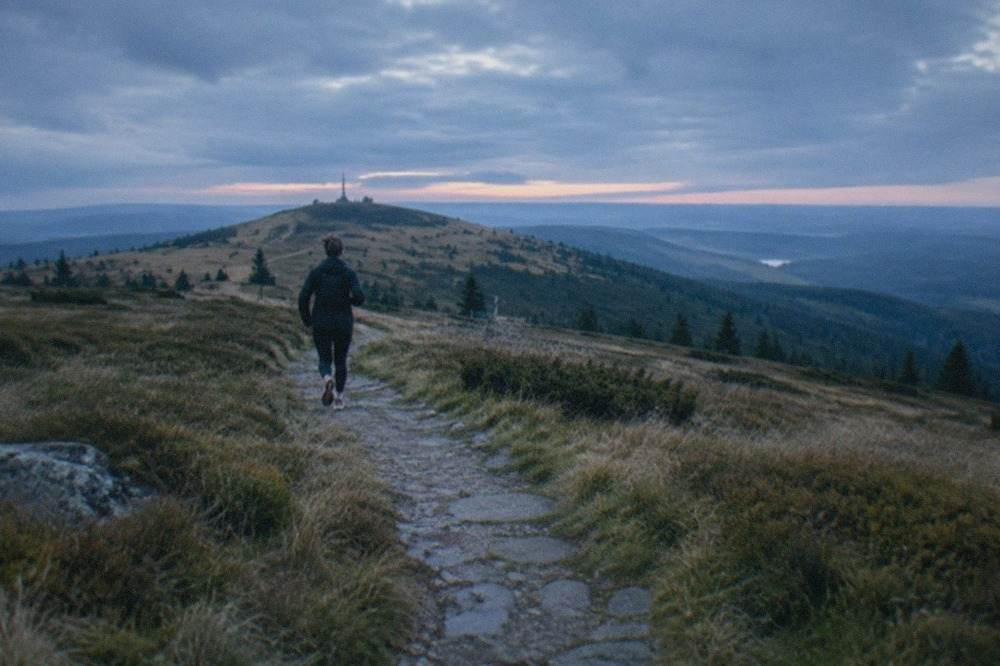
The walk around the top is mostly gentle. Open moorland paths link the summit stations, and on a clear day the views run west across the whole Rhine plain to the Vosges in France, and south toward the Alps when the air is clean enough, which is not every day. The paths are waymarked and well trodden, but they are mountain terrain: proper shoes, water and a layer are the baseline kit, and the moor is exposed, so sun and wind both bite harder than they do in Freiburg.
The Feldsee detour is the quietest of the three. It adds real distance and descent, and the lake itself sits in a bowl of forest that feels far more remote than its distance from the lifts suggests. Treat it as the stretch goal of the day rather than the plan: if the bus times are tight, the Seebuck loop is the one that always fits.
Guided options exist that take the planning off your plate. The Hike to Germany's Tallest Tree and the Forest People runs about four hours from $44 and walks a Black Forest route with a guide, while the Schlossberg Hike with history and views is the short, cheap version at about 2.5 hours from $28 for warming up in town first. Check availability if you would rather have someone else read the weather and the trail signs for you.
Feldberg In Winter: Skiing, Snow And Short Days
In winter Feldberg becomes the closest real ski area to Freiburg, with lifts above the village, snow that arrives earlier and lasts longer than in the valley, and the same train-plus-bus access, though the last buses down arrive well before dark. You do not rent a car to ski here; you set an alarm and check the snow report.
The ski area is modest by Alpine standards, and that is precisely its use case for a Freiburg trip: a full day on real slopes without transferring to a resort town. Lifts serve a set of runs above the village, and the wider network of trails makes the mountain a genuine cross-country and snowshoe destination too. Kit rental is available on the mountain, but arrive early on weekends and school holidays, because the rental counters are the bottleneck, not the lifts.
Two pieces of recent news shape the winter picture. Local reporting records that the renovation of the Bismarck monument on the Feldberg was completed around August 2025, so the landmark above the Seebuck is freshly restored. And in December 2025 plans were announced to rebuild what is described as the world's oldest ski lift on the Feldberg as a functioning historic attraction; that project is announced, not yet built, so check before you plan a day around it.
One honest caution about the descent logistics: winter days are short, the mountain road gets its own microclimate, and the last connections leave the summit area early. Plan to be at the bus stop with time in hand, not at the lift.
The Seebuck, The Bismarck Monument And What The Views Actually Show
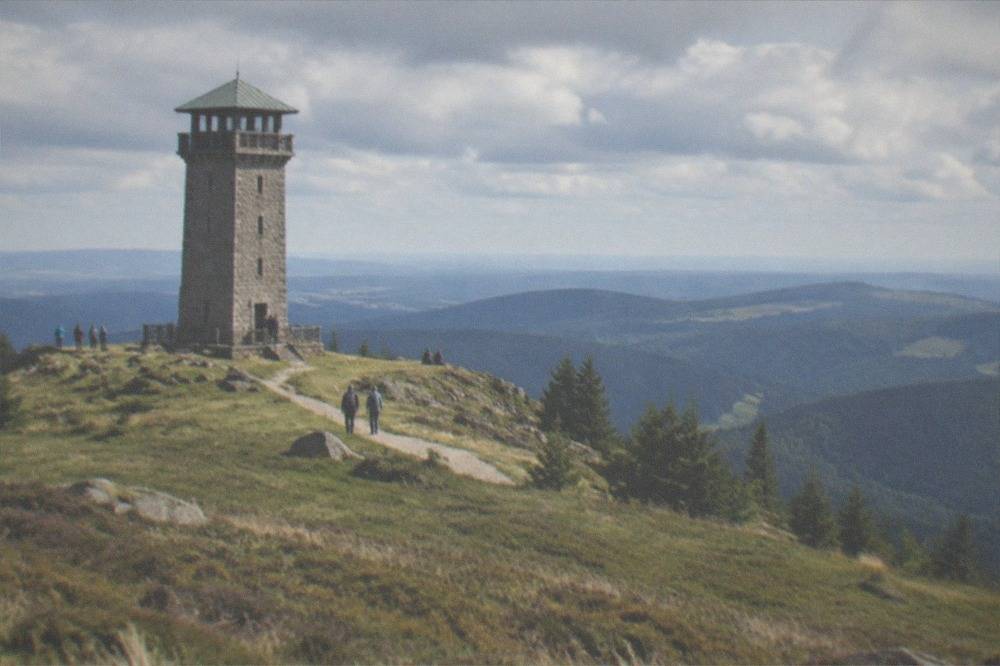
The Seebuck is the secondary summit shoulder a short walk from the top stations, capped by the Bismarck monument, freshly restored in summer 2025, and it delivers the classic panorama shot: the Black Forest ridgeline rolling away toward the Rhine plain and the Vosges beyond. If you only do one walk on the mountain, this is it, because it is short, mostly level, and unreasonably photogenic.
The monument itself is a stone tower, and the terrace around it is the summit's natural viewpoint. On the clearest days the sightline reaches the Vosges across the Rhine in France and, with luck and clean air, the Alpine chain to the south. Be skeptical of the Alps promise: haze over the Rhine plain filters the view more often than not, and a day that looks merely pleasant in Freiburg can be a bluebird day high on the ridge, or the reverse. Check the mountain's own weather report, not the city's. Everything else covered here is indexed on Freiburg Travel Guide.
For reading the views and the terrain with more context, the Badische Zeitung report on the monument's completed renovation gives the landmark's recent history, and the ski-lift rebuild plans are covered in Stuttgarter Zeitung's coverage of the oldest-lift project. Both are worth a skim before a trip that hangs on either landmark.
Feldberg Weather: Read The Mountain, Not The City Forecast
Plan Feldberg around mountain weather logic: the summit runs several degrees colder than Freiburg, clouds sit on the ridge far more often than in the valley, and the best months for a walking day are late spring through early autumn, with early starts in high summer to beat both haze and afternoon thunder risk. The city forecast is a floor, not a prediction, for what the top will do.
The numbers below are the verified climate baseline for the Freiburg valley itself, the closest long-term station data we can quote with confidence. Read them as the launching conditions: the mountain above will reliably be colder, wetter in cloud, and windier than these figures.
| Season | Mean temperature | Rain per month | Sunshine per month |
|---|---|---|---|
| Spring (Mar-May) | 7.0-14.9 °C | 54.3-103.4 mm | 146.8-206.8 h |
| Summer (Jun-Aug) | 18.3-20.1 °C | 83.3-92.2 mm | 232.7-252.2 h |
| Autumn (Sep-Nov) | 6.1-15.4 °C | 66.2-78.5 mm | 66.6-176.2 h |
| Winter (Dec-Feb) | 2.5-3.5 °C | 48.6-49.1 mm | 56.3-91.8 h |
What this means in practice: May can deliver the best combination of green hills and stable air, July and August give the longest days but also the highest thunderstorm odds, and October is the photographer's gamble, with the clearest air of the year on the days it is not raining. Winter is its own product entirely, covered above. Whenever you go, carry the layer you think you will not need; the moor is unsheltered and the wind is constant. Our broader best time to visit Freiburg guide works through how these seasons interact with crowds, prices and city events.
What A Feldberg Day Actually Costs
A Welcomekarte at €27.00 for three days is the value pick if a cable car ride is anywhere in your plans. What you spend depends on the two big variables, transport and lift access, which can each change the bill.
| Cost item | Low | High | Notes |
|---|---|---|---|
| Regional transport | €7.20 | €27.00 | Day ticket vs 3-day Welcomekarte, which adds the Schauinslandbahn |
| Schauinslandbahn alternative ride | €12.00 | €15.00 | Single vs return, if you swap the Schauinsland ridge into the day |
| Meal on the mountain | Varies | Varies | Summit restaurants exist; prices are not published in our verified sources |
| Guided hike from Freiburg | $28 | $44 | Schlossberg hike vs tallest-tree hike, from the live listings |
Note the currency line: local transport, food and admissions are paid in euros at the till, while guided tour and experience prices on this site's cards are listed in US dollars, exactly as the operators publish them. The two never blend into one figure.
Do not treat the mountain day as the only thing you will pay for in Freiburg, either. The city's visitor levy is an Übernachtungsteuer of 5% of the net room price, not a flat nightly fee, and it applies to private stays; our where to stay in Freiburg guide explains how it shows up on a hotel bill.
Back Down In Freiburg: The Evening After The Mountain
A Feldberg day ends early by design, because the last buses down beat the last trains, which hands you a bonus evening in Freiburg, and the strongest move is to book a guided walk or show for the hours your legs can still handle. A full day on the summit trails argues for something seated, slow or comic rather than another hike.
This is where the city's odder offerings earn their keep. Freiburg has a genuine tradition of theatrical guided walks, and the Travestie city tour with Betty BBQ is the standout: about 1 hour 20 minutes, rated 4.9 across 140 reviews, from $41, a costumed comedy walk through the old town that is exactly the right intensity for legs that have already done a mountain. The Drag Queen Show Walk with Betty BBQ is the sibling product if you want the full evening version. Pair either with dinner at one of the taverns covered in our Freiburg food guide, and the day closes itself.
If the group is too tired even for that, the fallback is simple: Augustinerplatz in the evening, a drink from a shop, and people-watching on the steps of one of the city's most-used public living rooms. It costs nothing, which after a day of transport and lift tickets is its own argument.
When The Clouds Sit On The Summit: Alternatives And Backups
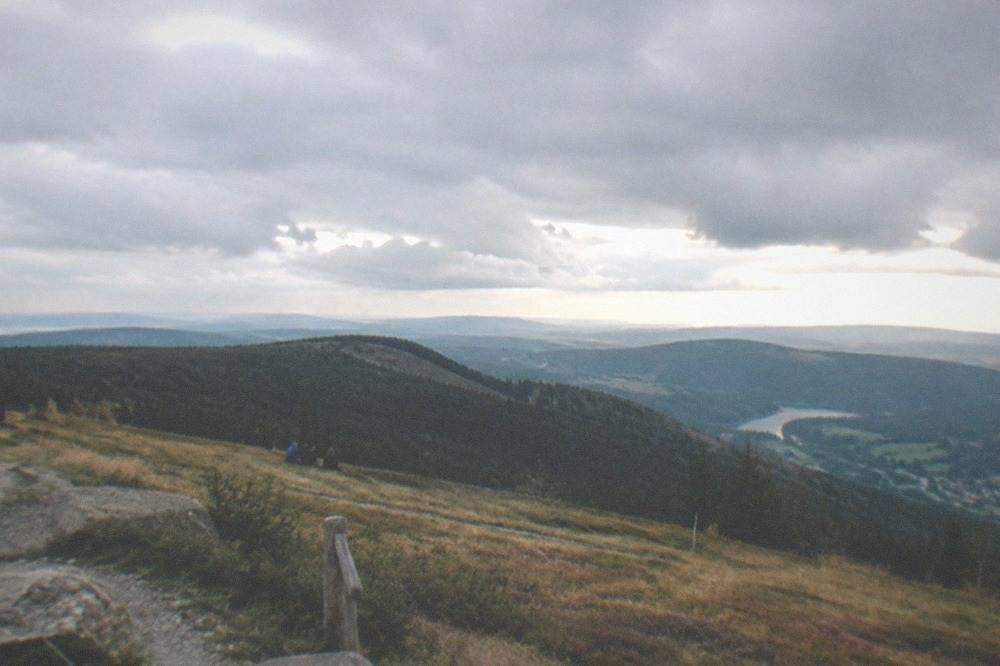
If Feldberg is socked in, the best swaps are the Schauinsland ridge on its cable car, the lake and town circuit at Titisee, or a deliberately indoor Freiburg day, and the Welcomekarte conveniently prices two of those three into one ticket. Mountain days fail on weather often enough that a plan B chosen before you leave is part of the plan A.
The Schauinsland option is the closest like-for-like: another high Black Forest summit with a gondola. The Schauinslandbahn runs a 3,600-meter cable car daily from 09:00 to 17:00, extended to 18:00 during the Baden-Württemberg summer holidays, with adult singles at €12.00 and returns at €15.00, per its official tariff and operating pages. It closes for its autumn overhaul from 16 November to 4 December 2026, with a further spring revision from 22 February to 19 March 2027, so check the operating-times page before committing. Our full Schauinsland guide covers the trails and the mining museum up there.
The Titisee fallback keeps you in the same mountains but lowers the ambition, swapping summit hiking for a lake walk, boat hire and a very touristic promenade. It is not a wilderness experience, and on a bad-weather day everyone else has had the same idea, but the train access is easy and the Titisee guide lays out what is worth the stop. The third fallback is to stay low entirely: our rainy day in Freiburg guide is built for exactly the day the mountains cancel themselves.
For something between a hike and a pub night, the Veni, Vidi, Vino wine hike runs about 2.5 hours from $79, rated 4.4 across 167 reviews, walking vineyard country with tastings rather than moorland, a graceful way to spend a day the summit refused you. For more general planning, the hiking near Freiburg guide sorts the region's trails by difficulty and access.
Common Questions About Feldberg
How do I get from Freiburg to Feldberg without a car?
Take a tram to Freiburg's main station, ride a direct regional train on the Höllentalbahn line toward Titisee, then change to the connecting local bus up to the Feldberg village and lifts. The whole chain is covered by ordinary RVF regional tickets, from a day ticket at €7.20 for one zone up to the 3-day Welcomekarte at €27.00. Check the bus times down before you go up, because the last buses leave the mountain well before the last trains leave the valley.
Is Feldberg worth visiting in winter?
Yes, winter is arguably Feldberg's main season: it is the closest proper ski area to Freiburg, with lifts above the village, rental gear on the mountain and reliable snow well before the valley is white. The trade-offs are short daylight and early last buses down, plus busy rental counters on weekends and school holidays. Cross-country skiing and snowshoeing extend the mountain well beyond the downhill runs.
What does a Feldberg day trip cost?
Transport is the main line: a zone-appropriate RVF day ticket runs €7.20 to €14.30, and the 3-day Welcomekarte at €27.00 adds the Schauinslandbahn cable car and a Kulturbonus. The Schauinslandbahn ride alone costs €15.00 return, so the Welcomekarte pays off once your plans include a cable car. Budget food separately, since summit restaurant prices are not in our verified sources.
Can I see the Alps from Feldberg?
Sometimes. On days with clean air the sightline from the Seebuck and summit viewpoints reaches the Swiss Alps to the south, but haze over the Rhine plain filters the view more often than not, and the mountain's own cloud can sit on the ridge while Freiburg stays sunny. The reliable view is west to the Vosges in France; treat the Alps as a bonus, not the plan. Our guide on seeing the Alps from Freiburg covers the odds in more detail.
What is the best time of year for a Feldberg hiking day?
Late May through early October, with early starts in July and August to beat both haze and afternoon thunderstorms. The Freiburg valley's verified climate data shows summer means peaking at 20.1 °C with 252.2 sunshine hours in July, while the summit above runs several degrees colder and windier at all times. October offers the clearest air of the year on the days it is not raining, and winter turns the whole mountain into the ski area instead.