What City Is Closest To Europa-Park, Germany?
The closest city to Europa-Park is Freiburg im Breisgau, about a 40-minute drive from the park's home village of Rust. Here is how the distances, trains and day-trip costs actually work.
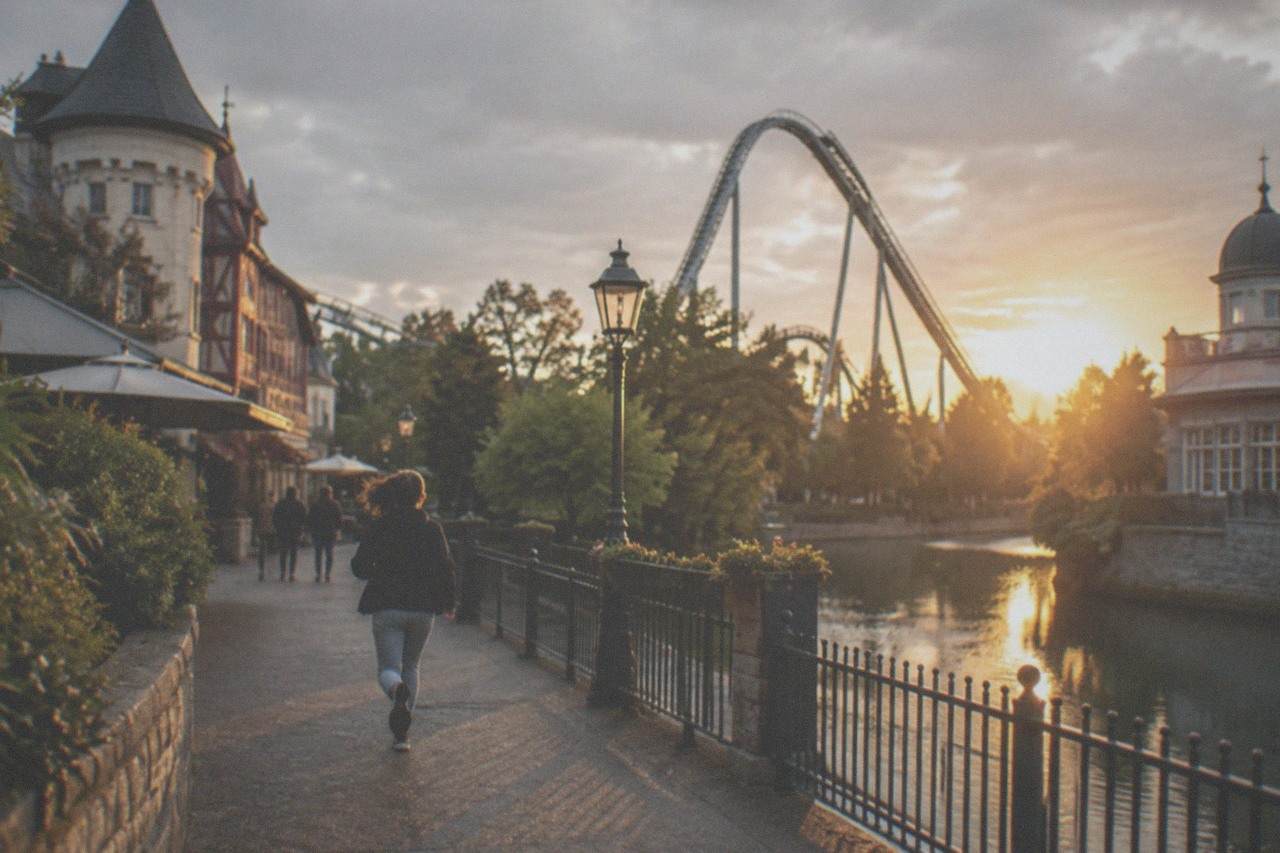
What City Is Closest To Europa-Park, Germany?
The closest city to Europa-Park is Freiburg im Breisgau. The park itself stands in Rust, a village of a few thousand people in the Upper Rhine plain, and Rust is too small to count as a city. Freiburg, a university city of 237,299 residents, sits about 36 to 40 km away by road, which recent reporting puts at a 30 to 40 minute drive, making it the nearest substantial city and the natural base for a visit.
That distinction matters more than it sounds. Plenty of searches for "city near Europa-Park" turn up answers listing mid-sized towns in every direction, but the honest picture is simpler. Rust is the park's address, Freiburg is the city, and everything else is either a small town in the Rhine valley or a longer haul across the Black Forest ridges. This site, Freiburg Travel Guide, exists largely because that Freiburg-to-Rust relationship is one of the most useful geographic facts in the whole region: a visitor can sleep in a real city with a medieval Old Town, a famous Minster and a good rail hub, and still be standing in a queue for a roller coaster before lunch.
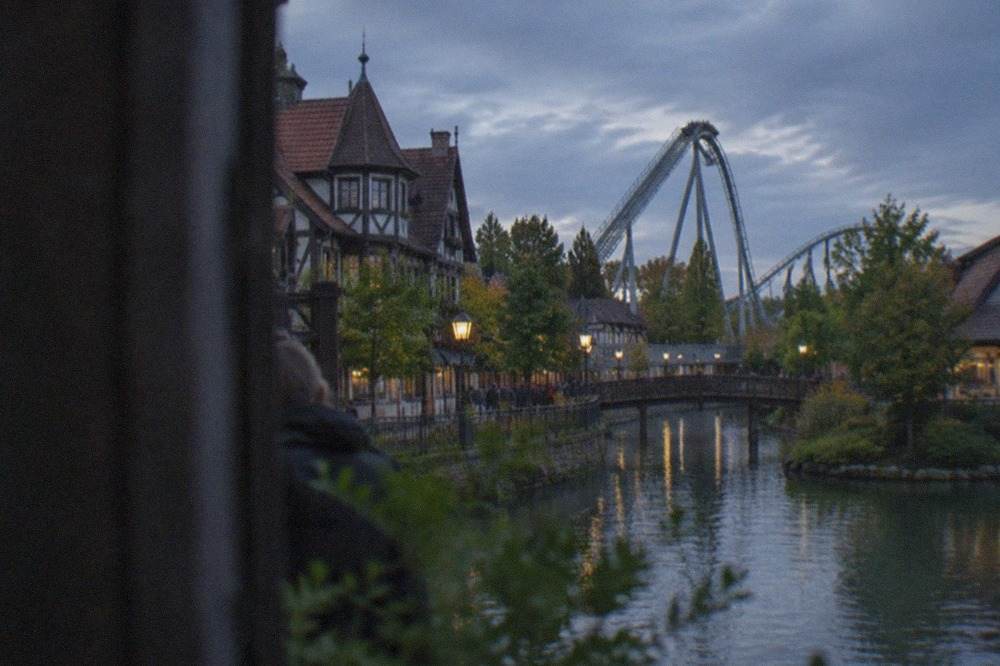
A few practical points follow from the geography. Rust sits in the Ortenau district of Baden-Württemberg, on the flat western edge of the Black Forest where it melts into the Rhine. The land west of the park is farmland and water meadows, the nearest French border crossing is close by at Rhinau or Marckolsheim, and the Vosges and Alsace wine country begin almost immediately beyond the river. To the east and south, the Black Forest hills climb toward the Schauinsland, the Feldberg and the Titisee, which is why so many Europa-Park itineraries end up folding in hiking or lake time. Freiburg sits right at the hinge between the two: park and plains to the north-west, hills to the south-east. If you are planning a wider trip, the Europa-Park and Black Forest combination guide covers how to chain them together without backtracking.
The ticket side is worth flagging early, because it shapes the day-trip decision. Europa-Park raised adult day tickets by about 4% for the 2026 season, effective 28 March 2026, with online adult tickets running about €59.50 to €76 depending on the date, as Swiss reporting on the increase notes. Those figures vary by date and are not fixed, so treat them as a range rather than a promise. On-site purchase costs more than buying online, which is one more reason to sort the ticket before leaving Freiburg rather than at the gate.
If your trip starts with a flight into the region, the park is usually reached via Basel or Frankfurt, and Freiburg is the natural first stop from both. The direct Airportbus from EuroAirport runs daily and takes about 55 minutes to Freiburg, and there is a bookable bus transfer from Basel Euro Airport to Freiburg that removes the guesswork of aligning a flight with a regional train.
How Far Is Europa-Park From Freiburg, Really?
By road, recent reporting puts Europa-Park at about 36 to 40 km from Freiburg, a 30 to 40 minute drive depending on traffic. By public transport the journey runs longer, typically a regional train to the Ringsheim/Europa-Park stop plus a short connecting bus, so a car-free trip needs more planning than a driving one. The distance is short enough that a day trip is genuinely easy either way.
The road route is the simple case. You leave Freiburg heading north-west, cross the Rhine plain, and the park's hotel towers and coaster silhouettes appear surprisingly early on the horizon. The 30 to 40 minute figure from the research is a normal-conditions estimate; on summer weekends and during the park's German school-holiday peaks, allow more, because the last few kilometers into Rust funnel a lot of traffic through a small village road network. Anyone who has driven into a major park on an August Saturday knows the drill.
Without a car, the standard route research points to is a regional train from Freiburg Hauptbahnhof to the Ringsheim/Europa-Park station, then bus line 7231 for the final few kilometers to the park entrance. The train leg is direct and comfortable; the point that catches people out is that bus 7231 is a short local service timed loosely around trains, so a missed connection can cost a chunk of the morning. Check the day's times before committing, especially on days when rail works are in the timetable. There has been a pattern of temporary closures on the Rheintalbahn line between Freiburg and Basel during 2026, with replacement buses on some weekends, and while those works sit on the southern side of the corridor, disruption there can ripple through regional timetables.
There is also a fully managed option that skips the timetable question entirely: a combined transport-and-entry package from Freiburg that runs about 15 hours door to door, listed from $127. For a traveler who wants the park without the logistics, that is the low-effort route, though it is a long day and the price sits above a self-organized train-and-ticket combination for anyone willing to do the planning.
If you are weighing whether the city is worth more than a launch pad, the honest answer is yes, and the question deserves its own look.
Is Freiburg The Best Base For A Europa-Park Trip?
For most travelers, yes. Freiburg combines the shortest city-to-park distance with the region's best all-round visitor offer: a walkable medieval Old Town, the Minster and its market square, a main railway station with direct long-distance links, and enough hotels and restaurants to absorb holiday crowds. Smaller towns closer to Rust exist, but none matches Freiburg's mix of proximity, transport links and things to do on the days you are not at the park.
Consider what a Europa-Park trip actually involves. The park rewards early arrival, so the base needs to be within an easy morning's reach, and it needs to hold interest on the evening you return, exhausted, and on any rest day between park visits. Freiburg does both. The Münsterplatz market runs Monday to Saturday from 07:30, with up to 130 stalls, which means a park day can start with market fruit and a bread roll at 07:30 and still have you at the Rust gates near opening time. In the evening, the Old Town's taverns, the Augustinerplatz scene and the Bächle-lined lanes are a genuine place to wander rather than a hotel corridor.
There is also a purely financial angle. Freiburg charges an overnight tax of 5% of the net room price, an Übernachtungsteuer rather than a Kurtaxe, with guests under 18 exempt, as the city's own official accommodation-tax page sets out. That is a modest, percentage-based levy, not a flat nightly fee, and it applies whether you sleep in Freiburg or in the smaller towns around it. The practical saving argument for Freiburg is not the tax but the transport: staying farther away usually means either a rental car for the whole trip or longer, less frequent connections.
For visitors who want the city itself taken seriously, there is a guided option that goes deep rather than wide. Walking and Strolling the Historic Center is a roughly two-hour private-format walk from $228 that spends its whole time inside the Old Town lanes, gates and squares. It has only 6 reviews so far, too few to say anything reliable about quality from the ratings alone, but the concept suits travelers who have just done two days of coaster queues and want a calm, slow, well-explained city instead. Check availability for your dates if that sounds like your pace.
For Italian-speaking visitors, the same idea exists in Italian: the Old Town Private Walking Tour in Italian runs about 90 minutes from $51, with 11 reviews so far, again too few a pool to treat as a verdict. Both are examples of the smaller, language-specific tours that quietly make up much of a city's guiding scene, the kind that rarely headline search results but solve a real problem for a family or a couple who would otherwise miss half of what a guide says.
What Does A Europa-Park Day Trip From Freiburg Cost?
Budget three layers: the park ticket, the transport, and the food inside. Online adult day tickets run about €59.50 to €76 depending on date, with an on-site surcharge; the train-plus-bus combination from Freiburg costs a few euros each way on regional fares; and food inside the park is priced like any major resort.
Those ranges deserve their hedging. The ticket band is reported, not fixed: it varies by date, and the endpoints here are the ones research actually returned, so do not anchor on a single number. The transport figure depends on which ticket you buy; regional fares in the Freiburg area are inexpensive for short hops, and a day ticket covering the relevant zones can beat buying singles if you plan to move around afterward. Food is the hardest to pin down because the park's restaurants span quick counters to sit-down themed dining; treat lunch as roughly a mid-range restaurant price and you will not be far off.
The managed package deserves a second mention because of what it removes. At about 15 hours, from $127, it is a commitment, and the price is above the self-organized floor. What you buy is the absence of timetable risk, which on a rail-works weekend in the Rheintal corridor is not nothing. Families with small children and one park day to work with often find that trade worth it; solo travelers and couples who enjoy the logistics usually do not.
There is a cheaper way to see the region that skips the park entirely, and it is worth naming for the sake of honesty: the whole southern stretch from Freiburg toward the Titisee, the Feldberg and the Schauinsland is reachable on local transport, and a five-day Black Forest road trip itinerary can be done without Europa-Park at all. But for visitors whose trip is specifically about the park, Freiburg remains the anchor.
Which Other Towns Are Near Europa-Park, And Do Any Beat Freiburg?
No town near the park beats Freiburg as a base, but several are worth knowing: Ringsheim, the village with the park's rail stop; Lahr and Offenburg, small towns on the north-south rail line toward Karlsruhe; and Rhine villages on the French side for travelers crossing from Alsace. Each suits a specific itinerary, but none offers Freiburg's combination of distance, transport and things to do.
The names matter mostly for planning. Ringsheim exists in most itineraries purely as the station name, and its bus link is the reason a car-free Freiburg trip works at all. The towns to the north sit on the main Karlsruhe to Basel corridor, so they suit travelers arriving along that line rather than from Freiburg. To the west, the French border and the Alsace wine country are close enough that a visitor staying in Colmar or Riquewihr can reach the park comfortably by car; for those travelers the closest useful German city is still Freiburg, but their actual base is French, and the drive crosses the Rhine rather than the Black Forest foothills.
The pattern to notice is that geography quietly sorts visitors into two groups. People whose trip is park-first tend to stay near Rust and visit Freiburg as a half-day city stop; people whose trip is region-first tend to stay in Freiburg and visit the park as a day trip. Both work. What does not work well is assuming the two are interchangeable: a night in a village near Rust gives you a five-minute morning drive and very little evening life, while a night in Freiburg gives you a 40-minute morning drive and one of southern Germany's most agreeable small cities to come home to.
Seasonality is the final variable. The park runs a full season calendar with summer peaks, Halloween weeks and a Christmas-glasshouse period, and its busiest dates align with German school holidays, exactly when Freiburg's own hotel demand peaks too. Booking the city stay and the park ticket in the same week is the practical move, because a cheap ticket date with no bed to sleep in is not a plan. In the quieter shoulder weeks, May and late September, both sides of the arrangement get easier and the drive gets shorter.
Common Questions About The Closest City To Europa-Park
What city is closest to Europa-Park, Germany?
Freiburg im Breisgau. The park stands in the village of Rust, and Freiburg, with 237,299 residents, is the nearest substantial city at about 36 to 40 km by road, a 30 to 40 minute drive.
Is Europa-Park actually in a city?
No. Europa-Park is in Rust, a small village in the Ortenau district of Baden-Württemberg. Rust has the park's hotels and infrastructure but is far too small to be a city, which is why the nearest city question points to Freiburg.
Can you get from Freiburg to Europa-Park by train?
Yes. Regional trains run from Freiburg Hauptbahnhof to the Ringsheim/Europa-Park stop, and bus line 7231 covers the final few kilometers to the park entrance. Check timetables on rail-works weekends, as the Karlsruhe-Basel corridor has had temporary closures with replacement buses during 2026.
How much does a Europa-Park day ticket cost?
Online adult day tickets run about €59.50 to €76 depending on the date, after an increase of about 4% effective 28 March 2026, with an on-site surcharge on top. Treat the band as a range, not a fixed price, and check the operator's live listing for your specific date.
How long does the drive from Freiburg to Europa-Park take?
About 30 to 40 minutes in normal conditions, over roughly 36 to 40 km. Allow more on summer weekends and school-holiday peaks, when the approach roads into Rust get congested.
Is it better to stay in Freiburg or near the park?
Stay near Rust if the park is your only goal and you want a five-minute start; stay in Freiburg if you want a real city, a walkable Old Town and good transport for the rest of the region. Most first-time visitors to the area do better in Freiburg.