Are There Bears In The Black Forest In Germany?
A direct, honest answer to whether bears live in the Black Forest in Germany, what wildlife you will actually meet on its trails, and where animal lovers can go near Freiburg instead.
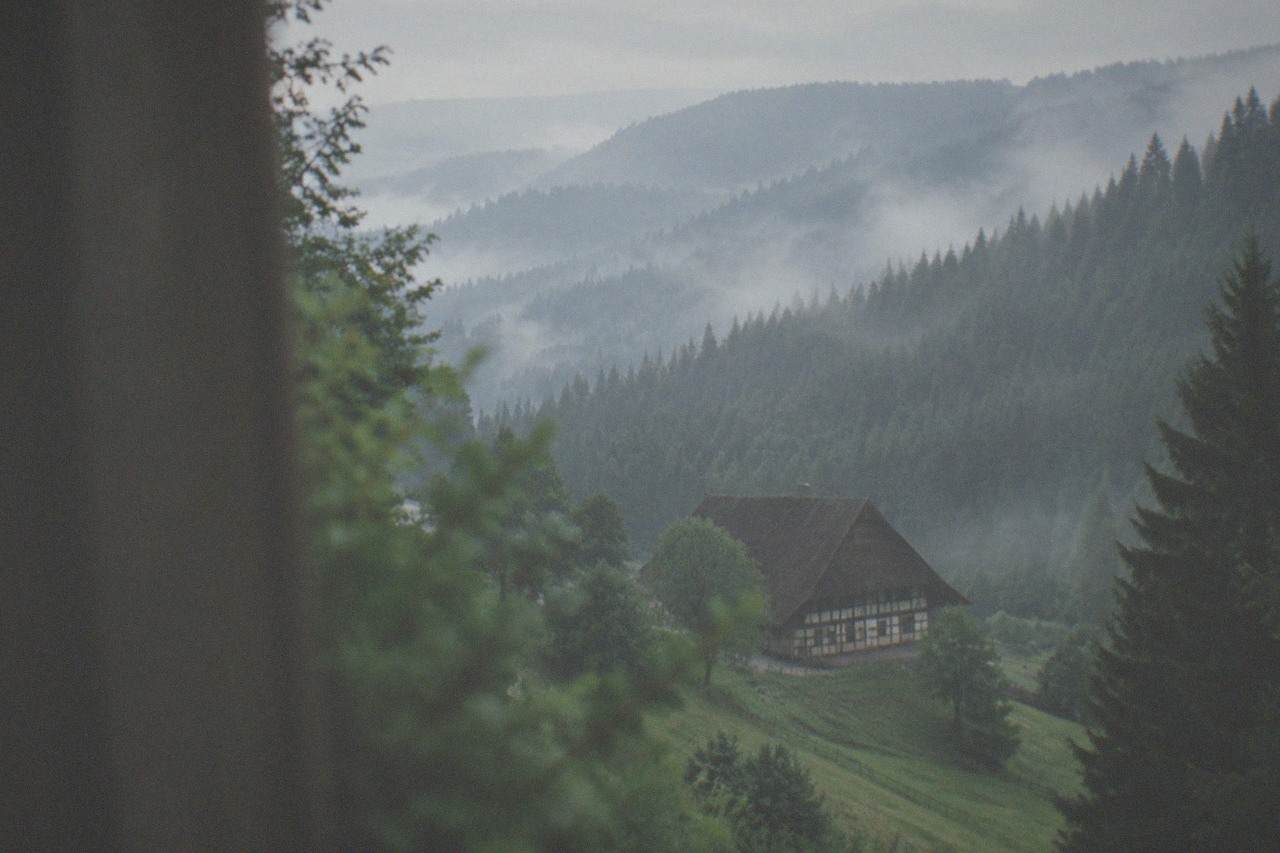
Are There Bears In The Black Forest In Germany?
No, there are no wild bears living in the Black Forest in Germany. Brown bears were hunted out of the region's forests long ago, and Germany today has no resident wild bear population anywhere in the country. A lone bear occasionally wanders across the Alps into Bavaria and makes the news, but the Black Forest, in the country's southwest corner, has no bears, and nobody hiking its trails needs to plan for one.
The question comes up more often than you might expect, and it is easy to see why. The region is called the Black Forest because the dense conifers on its hillsides can block out so much light that the woods genuinely feel dark, even at midday. Add the fairy tales the area is famous for, plus a name that sounds like it was invented for a wilderness, and many visitors arrive half expecting something large to be watching them from the treeline. The honest, reassuring answer is that nothing is. The Black Forest is a managed, heavily hiked, well-signposted cultural landscape, not a wilderness where large predators roam.
The distinction matters for planning. A week in the Black Forest is a week of marked trails, farm shops, spa towns, cable cars and cake, not a backcountry expedition. If you are staying in Freiburg and considering a Black Forest day trip, the things worth preparing for are weather, sensible shoes and a fair amount of uphill, not wildlife encounters. The region sits directly on Freiburg's doorstep, and its most popular corners, from Titisee to the Schauinsland summit, are busy with families and day-trippers through most of the year.
For travelers who want the region's nature explained rather than just walked through, a local guide is the most efficient route. A guided walk out of Freiburg can cover the geology, the forestry history and the wildlife question in one afternoon, and several private options start right in the old town, which makes them easy to slot into a city-based itinerary.
Why The Black Forest Has No Wild Bears Today
The Black Forest lost its bears centuries ago, and unlike some European regions, Germany has never reintroduced them. Brown bears were once widespread across Europe's forests, but systematic hunting and habitat loss erased them from Germany long before modern conservation existed. No resettlement program exists for bears in Germany, and the Black Forest today has no breeding population, no sightings record and no bear-management area of any kind.
The pattern is not unique to bears. Large predators across much of Central Europe share the same story, and Germany's forests, the Black Forest included, are now quiet on that front. The occasional bear that crosses into the country from Austria or Italy tends to appear in the southeastern Alps, hundreds of kilometers from the Black Forest, and those individual animals are tracked closely by wildlife authorities. Nothing comparable has ever been recorded in the southwest. When German media report on bears, they are reporting on Bavarian border regions, not the hills above Freiburg.
That leaves the Black Forest's reputation resting on atmosphere rather than fauna. The darkness of the canopy, the old farmhouses, the cuckoo clocks and the Brothers Grimm associations all feed the idea of a place that time forgot. In reality the forest is a working landscape: managed timber stands, vineyards on the sunnier slopes, ski infrastructure on the Feldberg, and a dense network of long-distance hiking trails that are walked by tens of thousands of people each year. A landscape that busy simply does not hide a large predator, and none of the region's wildlife monitoring has ever suggested one.
If the question behind your question is whether the Black Forest is wild enough to be worth visiting without a headline animal, the answer is yes, but for different reasons. The region's appeal is its scale and variety: deep gorges, high moorland, lakes like the Titisee, and villages that still make their living from wood and wine. You come for the landscape and the food, and the absence of bears is, for most visitors, entirely good news.
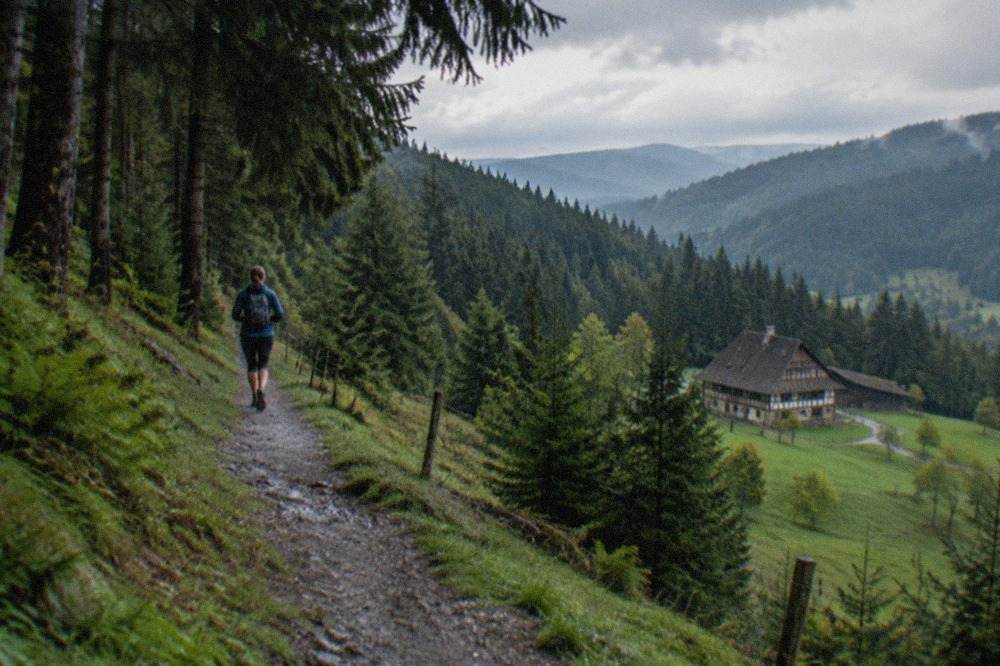
What Wildlife You Will Actually Meet On Black Forest Trails
What the Black Forest does have in healthy numbers is small and mid-sized wildlife: red deer and roe deer, wild boar, foxes, badgers, hares and a wide range of birds, including birds of prey overhead and black forest specialists like the capercaillie in remoter high moorland. None of these animals pose any threat to hikers, and the deer in particular are far more common than most city visitors expect.
Roe deer are the ones you will most likely see, especially in the early morning and around the field edges where forest meets farmland. They are shy, small and quick to disappear, and a quiet walker on a less-used trail in the early hours has a fair chance of spotting one. Wild boar are also widespread, and their rooted-up patches of soil are a common sight along trail margins, but the animals themselves avoid people almost entirely. Sightings are rare and brief, and the standard advice, giving them space and moving on calmly, covers every realistic situation.
Birdlife is the quiet highlight for anyone who pays attention. The region's mixed woodland supports woodpeckers, owls and songbirds in numbers that surprise first-time visitors, and the higher, quieter moorland areas toward the Feldberg are among the last strongholds in the region for some of the scarcer forest birds. Birders tend to do best in the early morning and in the shoulder seasons, when the trails are quiet and the canopy is less dense than in high summer.
None of this requires any special equipment or precautions. Ordinary hiking behavior, staying on marked trails and keeping food packed away rather than scattered at rest stops, is the whole of the wildlife playbook for the Black Forest. The animals you meet will be gone long before you get a photo, and that is exactly how it should be. For a sense of how managed and accessible the region's outdoor infrastructure is, the Schauinsland cable car alone is a 3,600-metre lift running daily from 09:00 to 17:00, with an adult return at €15.00, according to the operator's own tariff page. That is the level of development we are talking about: this is not bear country, it is day-trip country.
| Animal | How likely you are to see it | Where and when |
|---|---|---|
| Roe deer | Fairly likely | Field edges and quiet trails, early morning |
| Red deer | Possible | Larger forest blocks, dawn and dusk |
| Wild boar | Signs common, animals rare | Rooted soil near trail edges, mostly at night |
| Fox | Possible | Farmland margins, early and late hours |
| Birds of prey | Likely overhead | Open slopes and clearings, midday |
| Capercaillie | Very rare | High moorland, spring, quiet conditions |
| Bear | Not present | No wild population exists in the region |
Where Families Can See Animals Near Freiburg Instead
If the bear question comes from children hoping to see animals, the practical answer near Freiburg is the Mundenhof, the city's large animal park out toward the western edge of town. It is a well-loved family destination rather than a wildlife reserve, and recent reporting puts its 2025 visitor numbers at a record of more than 570,000. For wild animals in natural surroundings, the Black Forest trails themselves remain the honest option.
The Mundenhof is the sort of place that anchors a family half-day: space to walk, animals to see, and enough open ground that children can run. It sits within easy reach of Freiburg's tram network, which makes it one of the simplest excursions in the region for visitors without a car. It is worth checking the operator's own pages before a visit, because the site's rules have evolved recently; the park went smoke-free across its indoor and outdoor areas, including the restaurant, from 1 June 2026 under state law, with designated smoking zones, per the city's Mundenhof updates page. A covered picnic house converted from a former stable also opened in late summer 2025.
None of this, to be clear, is a substitute for the bear question: no honest writer should pretend there is a bear-viewing spot in the Black Forest, because there is not. What the region offers instead is a mix of accessible animal parks for families and genuinely wild-feeling forest for everyone else, and the two work well together in a single itinerary. A morning at the Mundenhof with children, followed by an afternoon trail walk, answers both halves of the family's wish list without anyone being disappointed.
If your trip is Freiburg-based and you want someone to weave the animal stories, the forest history and the city itself into one narrative, a private walk with a local guide is the format that does it best. The one-on-one setting lets a family with a curious child, or a couple with a specific interest, steer the route and ask anything, which is exactly the kind of flexibility group formats cannot offer.
Is Hiking In The Black Forest Safe Without Bears?
Yes, Black Forest hiking is very safe by any European standard, and the bear question is the one risk you can cross off entirely. The real considerations are mundane ones: weather that can turn quickly on the high ground around the Feldberg, genuinely steep ascents on some classic routes, and the need to carry water on longer stretches. Trail signage is good, mobile coverage is decent on most routes, and the trails are well used.
The weather point deserves the emphasis. The Black Forest's high country catches Atlantic fronts, and a warm sunny morning in the valleys can become a wet, cold afternoon on the ridge. Layers and a waterproof shell matter more here than any wildlife precaution ever will, and hikers heading for the higher routes in the shoulder seasons should check conditions the same day. The valleys, meanwhile, are gentler, better served by public transport and dotted with farm cafés, which makes them the natural choice for families and casual walkers.
Navigation is the other practical point. The region's long-distance network is famously well marked, but a paper map or an offline map on a phone still earns its place on any route that leaves the main tourist corridors. Distances between villages can be longer than they look on a flat map, and stopping for the day at a country inn is a Black Forest tradition worth planning around rather than rushing past. Food and drink are part of the region's trail culture: the farm-gate stands and small inns along popular routes are there because walkers have been their trade for generations.
For anyone comparing the Black Forest with genuinely wilder parts of Europe, the safety gap runs in the region's favor. There are no bears, no wolves to speak of in the region's visitor areas, and no venomous species that a hiker needs to know about. Insects are the only nuisance worth mentioning, with ticks present in German woodlands as elsewhere, so standard tick checks after a walk in long grass are sensible routine, particularly from spring through early autumn. That is the complete list of the region's wildlife-related precautions, and it fits in one sentence.
How To Explore The Black Forest From Freiburg
Freiburg is the natural base for the whole region: the Black Forest begins, quite literally, at the edge of the city, and the Schauinsland massif rises directly to its south. A car helps for the smaller villages, but the classic destinations, including Titisee, Triberg and the Feldberg area, are reachable by train and bus, and organized hikes and tours run year-round out of Freiburg itself.
The simplest split for a first visit is between the high country and the valleys. The high routes around the Feldberg and the Schauinsland deliver the views, the open moorland and the sense of the region's scale, while the valley towns like Titisee and Triberg deliver the postcard version: lakes, waterfalls, cake and clocks. Both halves are easy to combine from Freiburg in a single day, and both are well covered by the region's transport network. Visitors staying overnight in a participating Black Forest guesthouse may receive a KONUS guest card covering local transport, though as the tourism body's own KONUS page explains, the card is issued only by member municipalities, and Freiburg itself is not one of them.
Guided options fill the gap for visitors who want the landscape interpreted rather than just traversed. Out of Freiburg, the roster runs from a two-and-a-half-hour Schlossberg hike with narrow paths, history and views, priced from $28, to a roughly four-hour guided walk to Germany's tallest tree with the region's forest folklore attached, from $44. A three-hour herbal walking tour that ends with a wild-topped snack runs from $36, and a wine hike with tasting on the vineyard slopes runs about two and a half hours from $79. Several of these smaller-group experiences are new listings with no reviews yet, which is worth knowing when you compare them against long-established city walks carrying hundreds of reviews.
For city-based exploration before or after the forest day, private guides based in Freiburg are a strong fit. The Hello Freiburg private two-hour city walk pairs you with a local guide for a personal introduction to the old town, runs about 2 hours, and is priced from $141; it is a new listing with a single review so far, so there is not yet a review pool to judge it by. Bookings carry the usual free-cancellation terms, so a rainy morning does not have to cost the fee.
The same logic applies at a higher budget. A private guided walking tour of the city, around one and a half hours and from $239, suits visitors who want a dedicated guide and a fully custom route, and it carries 12 reviews on its listing. At the opposite end of the time budget, an express walk with a local compresses the essentials into about an hour from $90, with the same 12-review pool. All three formats are private, which is what makes them easy to shape around a forest-and-city day: you set the start time, and the guide works around the train timetable.
| Experience from Freiburg | Length | Price from | Reviews on the listing |
|---|---|---|---|
| Schlossberg hike, narrow paths and views | ~2.5 hours | $28 | No reviews yet |
| Hike to Germany's tallest tree | ~4 hours | $44 | No reviews yet |
| Herbal walking tour with a snack | ~3 hours | $36 | No reviews yet |
| Wine hike with tasting | ~2.5 hours | $79 | 4.4 across 167 reviews |
| Scavenger hunt self-guided tour | ~3 hours | $45 | 4.9 across 15 reviews |
For independent travelers, the practical sequence is simple. Pick one high-country day and one valley day, buy tickets at the RVF machine or on your phone, and treat the weather forecast as the real decision-maker each morning. The Freiburg Travel Guide covers the individual destinations in depth, and the region's signage and transport links are forgiving enough that a first visit rarely goes wrong.
A forest day paired with a guided city walk is the combination most first-time visitors end up happiest with, and the three private formats below cover the city half of that plan at different budgets and time commitments. Each runs with a local guide, each starts in the old town, and each can be rebooked if the weather turns.
Common Questions About Bears In The Black Forest
Are there bears in the Black Forest in Germany?
No. There is no wild bear population in the Black Forest, or anywhere else in Germany. Brown bears disappeared from the region's forests centuries ago, no reintroduction program exists, and hikers on Black Forest trails do not need to take any bear-related precautions at all.
Why is it called the Black Forest if there are no dangerous animals?
The name comes from the density of the conifers, not from any wildlife. The canopy is thick enough in places to make the woods feel dark even at midday, and the fairy tales and clock-making traditions built the region's mysterious reputation on that atmosphere rather than on any real danger.
What animals might I actually see on a Black Forest hike?
Roe deer are the most likely, especially at field edges early in the morning. Wild boar leave visible signs but avoid people, foxes appear near farmland, and birds of prey are common overhead. The high moorland shelters some of the region's scarcer forest birds for patient birders.
Are there wolves or lynx in the Black Forest?
No resident large-predator population shapes the visitor experience in the Black Forest. The region's wildlife story is one of small and mid-sized animals, and the practical hiking precautions that matter are weather, footwear and tick checks in long grass, not predator awareness.
Where can children see animals near Freiburg?
The Mundenhof, Freiburg's animal park on the western edge of the city, is the standard family choice and reported a record of more than 570,000 visitors in 2025. It is reachable without a car, went smoke-free from 1 June 2026, and added a covered picnic house in 2025, making it an easy half-day out.
Is it safe to hike alone in the Black Forest?
Yes, by European standards the region is very safe for solo hiking. Trails are well marked and well used, mobile coverage is decent on most routes, and the absence of bears removes the one risk category solo walkers worry about most. Standard preparation, layers, water and an offline map, covers the rest.